
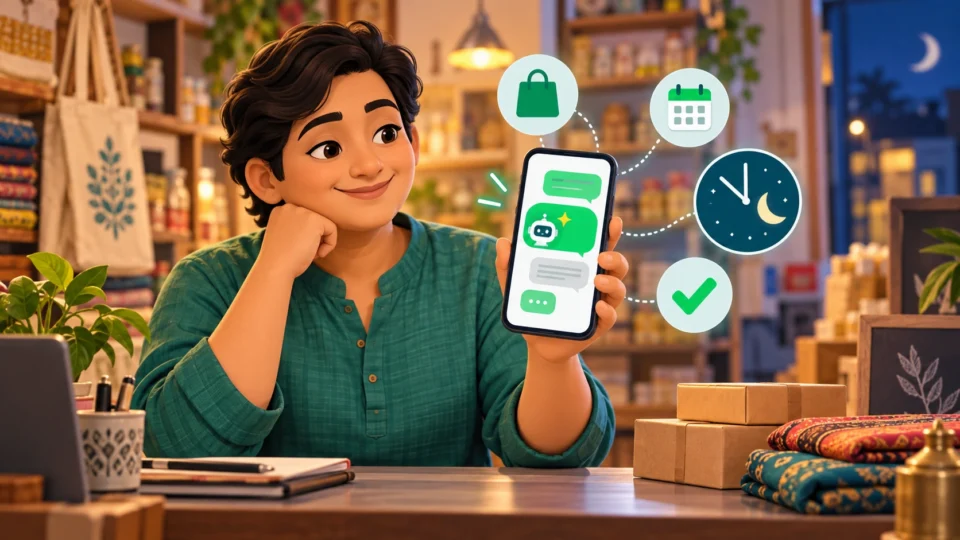
If you run a business in India, WhatsApp already runs a chunk of it, whether you’ve officially “set it up” or not. Customers are messaging you there right now. Some of them are waiting. So, the real question isn’t whether you should be on WhatsApp. It’s whether you’re still typing every reply by hand while your competitor’s setup is answering a lead at 11pm on a Sunday and locking in the booking before you’ve even had your morning chai.
That’s the whole idea behind WhatsApp AI automation, really. Nothing sci-fi about it. It’s software that reads what a customer wrote, figures out roughly what they want, and does something with it, at 2am, on a Sunday, without a person having to sit there typing.
This is a long one, so here’s what’s ahead: how the pieces actually fit together, what it costs you in 2026 rupees, which platforms are worth paying for, and the compliance stuff that nobody talks about until their WhatsApp number gets banned mid-campaign.
Why WhatsApp Beats Basically Every Other Channel You’ve Tried
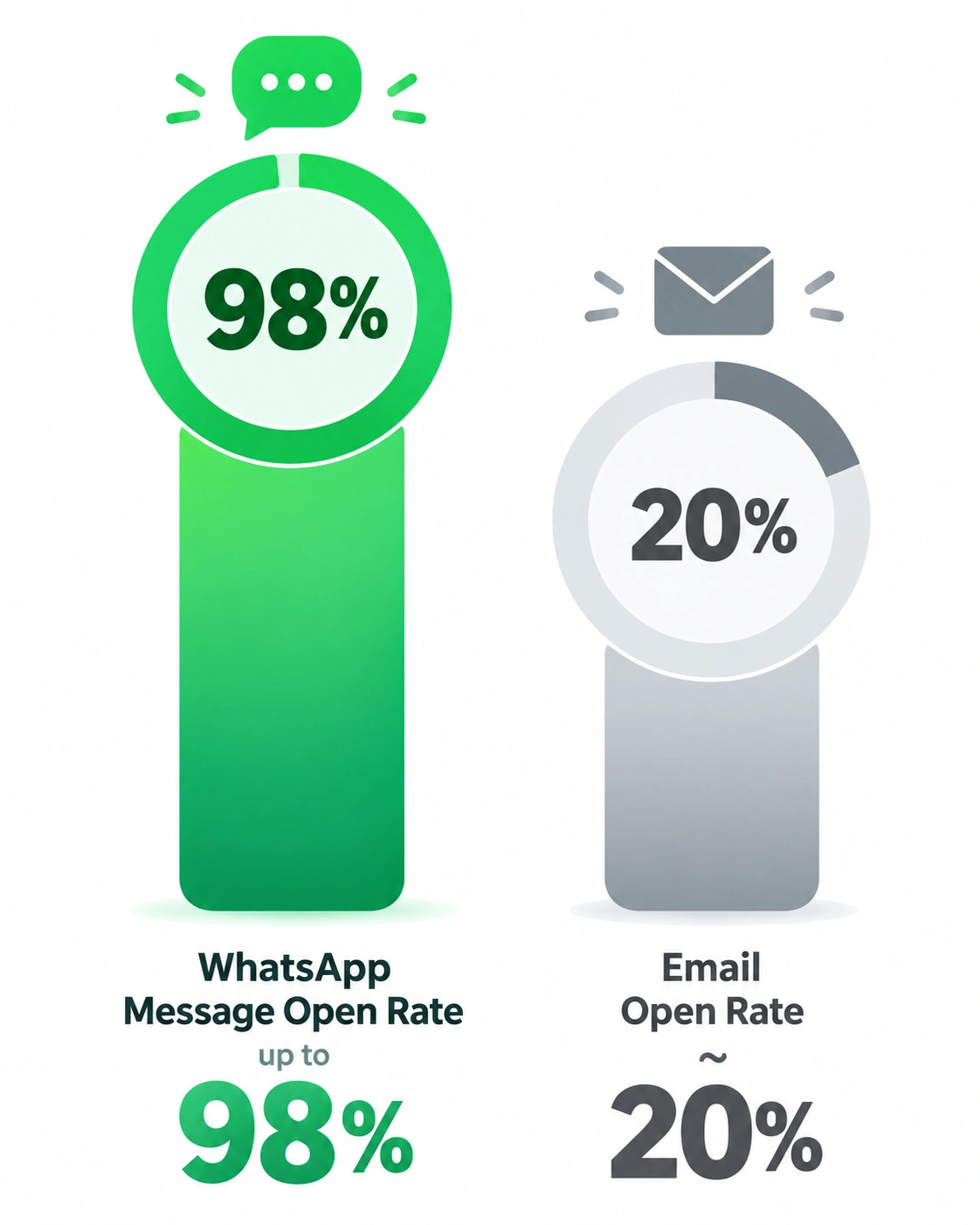
Quick number worth sitting with for a second: WhatsApp messages get opened somewhere north of 90%, some studies put it near 98%. Email, for comparison, is thrilled with 20%. Your customers aren’t dodging your WhatsApp messages. They’re already there, scrolling through them between chats with their mother and their office group.
And that’s really the point for Indian businesses specifically. This isn’t Instagram, where you’re competing for two seconds of scroll-attention against a hundred other brands. WhatsApp is the same app someone uses to talk to their tailor, their kid’s school, the guy who delivers their milk. A business message landing in that inbox doesn’t feel like an ad. It feels like a conversation. And that trust is worth a lot more than a cleverly designed banner.
But here’s the catch nobody mentions in the sales pitch. Manual WhatsApp breaks down fast once volume shows up. One person, answering by hand, tops out somewhere around 40 to 60 conversations a day before replies get slow and quality slips. Run an ad campaign, launch a sale, grow even a little, and you hit that wall almost immediately. That’s the moment automation stops being a “nice to have” and becomes the only thing standing between you and customers wandering off to whoever replies faster.
What People Actually Mean When They Say “WhatsApp + AI”
Let’s untangle this, because a lot of articles throw the phrase “WhatsApp AI” around like it’s one single thing. It isn’t. It’s three layers stacked on each other, and knowing the difference will save you from getting oversold.
Layer one is the WhatsApp Business API, sometimes called the Cloud API. This is Meta’s official pipe for sending and receiving messages at real scale. You can’t get it from the regular WhatsApp Business app on your phone; it comes through an approved partner.
Layer two is the BSP, short for Business Solution Provider. Think AiSensy, WATI, Interakt, Gupshup. These sit on top of Meta’s API and give you the dashboard, the chatbot builder, the broadcast tool, the billing.
Layer three is the AI itself, and this one’s a spectrum. Sometimes it’s just a rule-based flow dressed up to look clever. Sometimes it’s a genuine language model that can read a messy sentence and actually understand it, instead of only reacting to button taps.
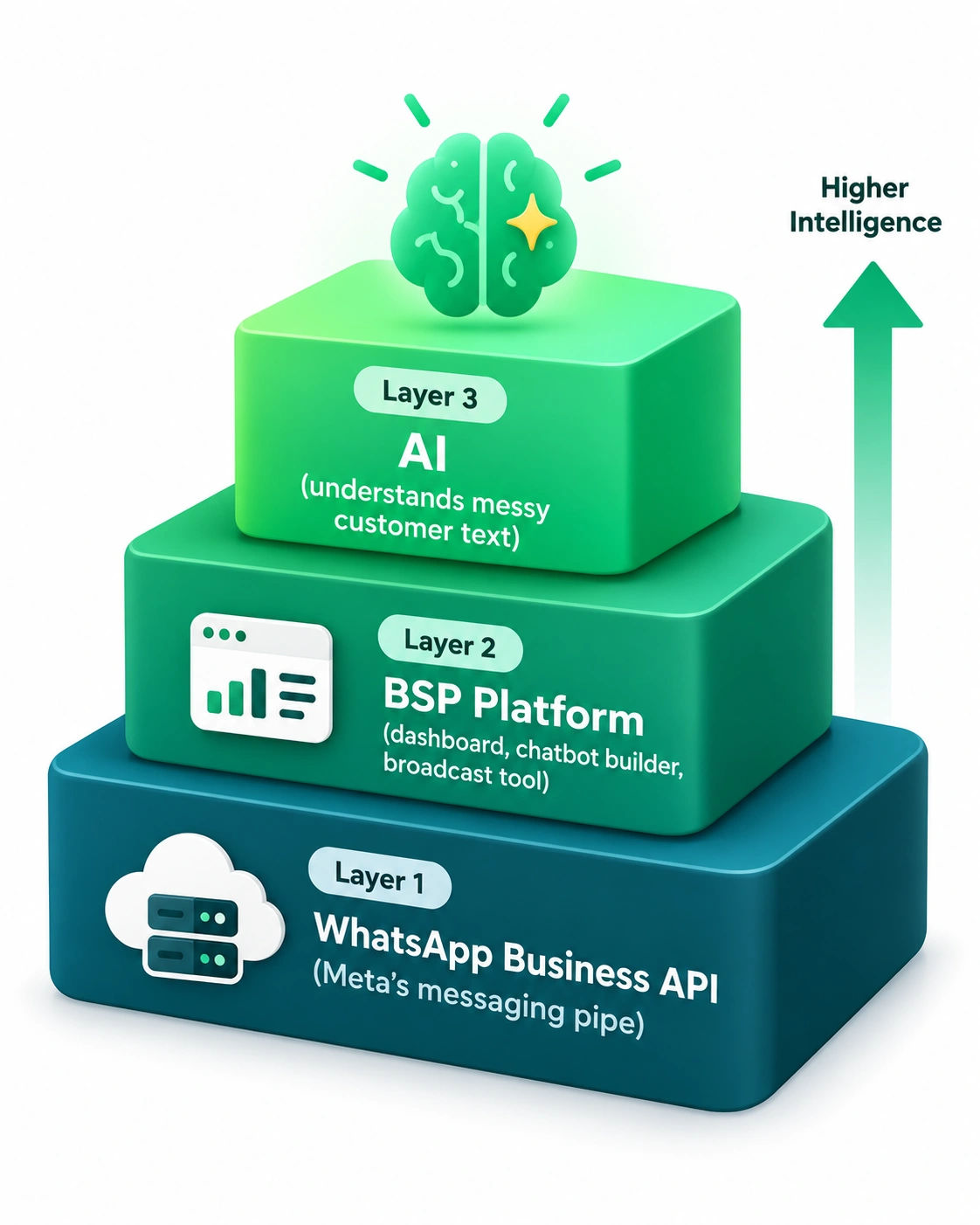
Most products marketed as “WhatsApp AI chatbots” are mostly layer two with a bit of layer three sprinkled on. Which matters, because it explains why the billing gets confusing fast. You’re often paying Meta for the message itself, the BSP for the platform, and sometimes yet another line item for an “AI add-on” bolted onto the plan.
One more thing before you build anything at all. Meta tightened its rules in January 2026. Open-ended, ChatGPT-style bots that’ll chat about anything under the sun got banned from the Business API entirely. What’s still completely fine is a bot built for one job, answering order questions, qualifying a lead, booking a slot, that kind of thing. So everywhere this article talks about “AI chatbots,” it means that second, narrower kind. Not a general AI friend living inside your WhatsApp. Honestly, that’s not a bad thing for small businesses anyway. A bot that does one job well tends to convert better than a chatty generalist that can talk about cricket scores but can’t book your appointment properly.
Chatbots: Where Almost Everyone Starts
The chatbot is usually the first thing a business sets up, and there’s a good reason for that. It’s the cheapest fix for the most common problem: leads going cold because nobody replied fast enough.
A decent one today can handle a lot. It’ll greet a new inquiry the second it lands and figure out what the person actually wants, a quote, a demo, an order update, a complaint. It can pull answers from a real knowledge base instead of just throwing up “press 1 for sales.” It’ll grab the basics, name, city, budget, product interest, before handing things to a human. And it’ll fire off order confirmations and appointment reminders on its own, no one lifting a finger.
Here’s the honest bit, though. Most of what you’ll build in AiSensy, WATI or Interakt is still button-flow logic underneath. Customer picks option A, sees three buttons, picks one, sees the next screen. That’s not a flaw, by the way. For most small business situations, it’s actually more reliable than a free-text AI reply, since a fixed flow can’t wander off script and say something weird to a paying customer.
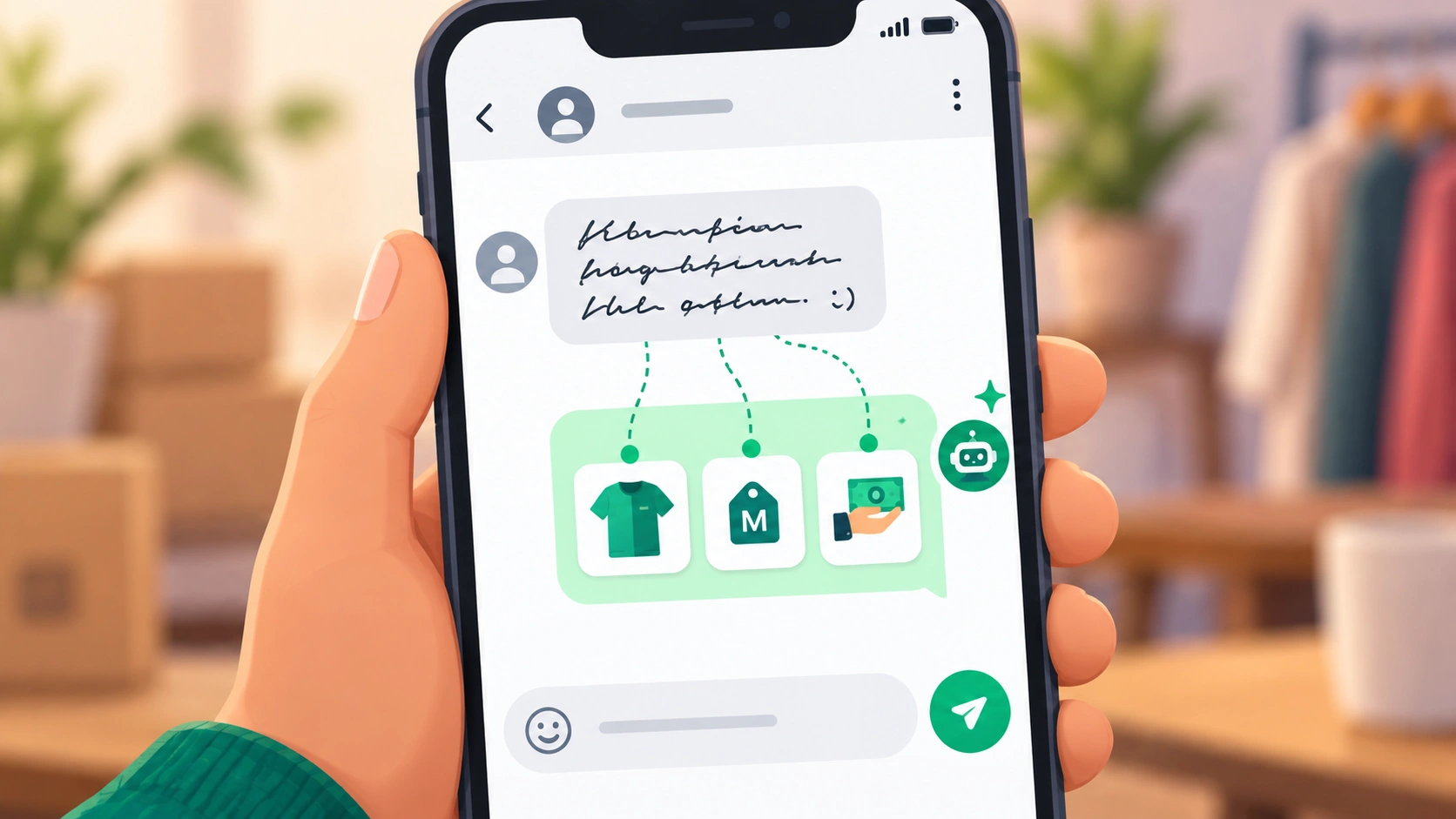
Where AI genuinely earns its keep is messy human typing. Somebody writes “hey do u guys have the blue kurti in medium also is cod available” and a button flow just sits there confused. A language-model layer can pull the product, the size, and the payment question out of that single run-on sentence and either answer it directly from your catalog or route it to the right place. That gap, honestly, is the difference between the chatbots everyone rolled their eyes at back in 2019 and the ones actually worth using now.
Lead Qualification: Probably the Fastest Payback You’ll Get
If you’re running ads, this is likely the single best use of your automation budget. Here’s the pattern that plays out constantly: you spend money on a Click-to-WhatsApp ad, someone messages in, and then… six hours pass because your sales team was on another call. By the time someone replies, that lead has probably already messaged two or three of your competitors.
An AI qualification flow steps in the second the message arrives. It asks what actually matters, budget, timeline, location, what they’re really looking for, and scores the answer. Strong lead? It books them straight onto a calendar slot. Lukewarm? It flags a human to call within minutes instead of hours.
Real estate agents, coaching institutes, B2B service providers, they all lean hard on this in India, because their ad-driven lead volume is huge but the actual conversion rate on any single lead is small. Automate the qualification step and your salespeople stop wasting half their day screening fifty chats just to find the five worth a phone call.
Follow-Ups: The Boring Job AI Handles Better Than Any of Us Would
Nobody wants to manually chase two hundred people who dropped something in their cart and disappeared, or who asked for a quote on Tuesday and went radio silent. It’s a tedious job, and honestly, a slightly awkward one. People forget. People get busy. People just avoid it because chasing feels a little needy.
AI doesn’t get embarrassed about it. It can nudge someone about that abandoned cart, maybe sweeten it with a small discount. It can check in on a quote that never got a reply, spaced out sensibly instead of every single day. It can quietly reach out to someone who hasn’t ordered in 60 or 90 days with something actually relevant to what they bought before.
The trick is restraint, and this is where a lot of businesses shoot themselves in the foot. A message every single day starts feeling like spam, people block the number, and that tanks your WhatsApp quality rating, which then throttles delivery for everyone else you message too. Good automation knows when to stop, ideally the moment the customer replies or actually buys something.
Getting Recommendations Right Without Feeling Like a Stalker
Recommendation flows work when they’re grounded in something the customer actually did. “You bought running shoes last month, here’s matching socks at 20% off” reads fine. “We thought you might like this random thing” reads like a guess, because it is one.
Tools that plug into your real order history or catalog can suggest restocks or complementary products with some actual logic behind them. Interakt does this reasonably well if you’re on Shopify, since it’s already looking at your order data anyway. On a generic platform without that kind of integration, you’re mostly stuck with broad category guesses. They still work, just not nearly as well.
Who Should Actually Bother with This
Before getting into which tool to buy, it’s worth pausing here. This stuff isn’t for everyone, and any article telling you otherwise is trying to sell you something.
It makes sense for D2C brands with repeat customers, service businesses booking appointments, coaching centres and clinics and salons, real estate and education lead-gen, and any e-commerce store whose support tickets have outgrown one overworked person answering by hand.
It doesn’t make much sense yet if you’re only getting 20 or 30 WhatsApp conversations a week. At that volume, the monthly platform fee will cost you more than the time it actually saves. A basic auto-reply from the free WhatsApp Business app covers you fine until you outgrow it.
Customer Support: Let AI Handle the Repeats, Not the Whole Job
The setups that actually work well in 2026 don’t hand support entirely to AI. They let AI take the repetitive 70%, “where’s my order,” “how do I return this,” “what time do you close,” while a real person steps in the moment something gets emotional, complicated, or expensive.
Good support automation pulls instant answers from your FAQ or order system so nobody’s stuck waiting on a human to go check. It recognizes when a conversation is getting heated or complicated and hands off to a live agent with the full chat history attached, so the customer isn’t stuck retyping their whole problem from scratch. And it tags and prioritizes tickets so an urgent complaint doesn’t sit behind twenty people asking about your return policy.
If a bot is the only support, you offer and it can’t hand off cleanly when its stuck, customers feel like they’re arguing with a wall. And that does more damage to your brand than a slow reply from a tired human ever would.
CRM: The Thing Everyone Forgets Until It’s Too Late
Chats without a CRM sitting underneath them are basically just noise. Nice conversations, sure, but if nothing’s tracking who said what and when, you’ll lose track the moment your team grows past two people juggling one shared phone.
Most decent WhatsApp AI platforms now bake in some CRM layer, or connect out to Zoho, HubSpot, Salesforce. WATI leans harder into this than AiSensy does, which makes it the better pick if your sales process already lives inside one of those systems. If you’re running purely off WhatsApp with nothing else backing it up, at least find a platform with tagging and notes and some kind of pipeline view, so nothing vanishes the day your intern who was handling DMs goes on leave.
AI Sales Agents: A Step Past Chatbots
Some platforms have started pushing past “answer FAQs” into what they’re branding as AI sales agents, bots that can carry a longer back-and-forth, handle a bit of pushback on price, walk through plan options, and actually try to close.
This works well for products where the sales conversation repeats itself in predictable ways, SaaS subscriptions, insurance renewals, courses with a handful of fixed pricing tiers. It gets shakier fast for anything high-ticket and trust-heavy, enterprise contracts, real estate closings, the kind of sale where a person needs to feel like they’re talking to a person. Don’t let a sales rep convince you an AI agent replaces your best closer. What it actually replaces is the first three exhausting messages your closer used to have to type before the real conversation even started.
Marketing on WhatsApp: What Broadcasts Actually Cost You
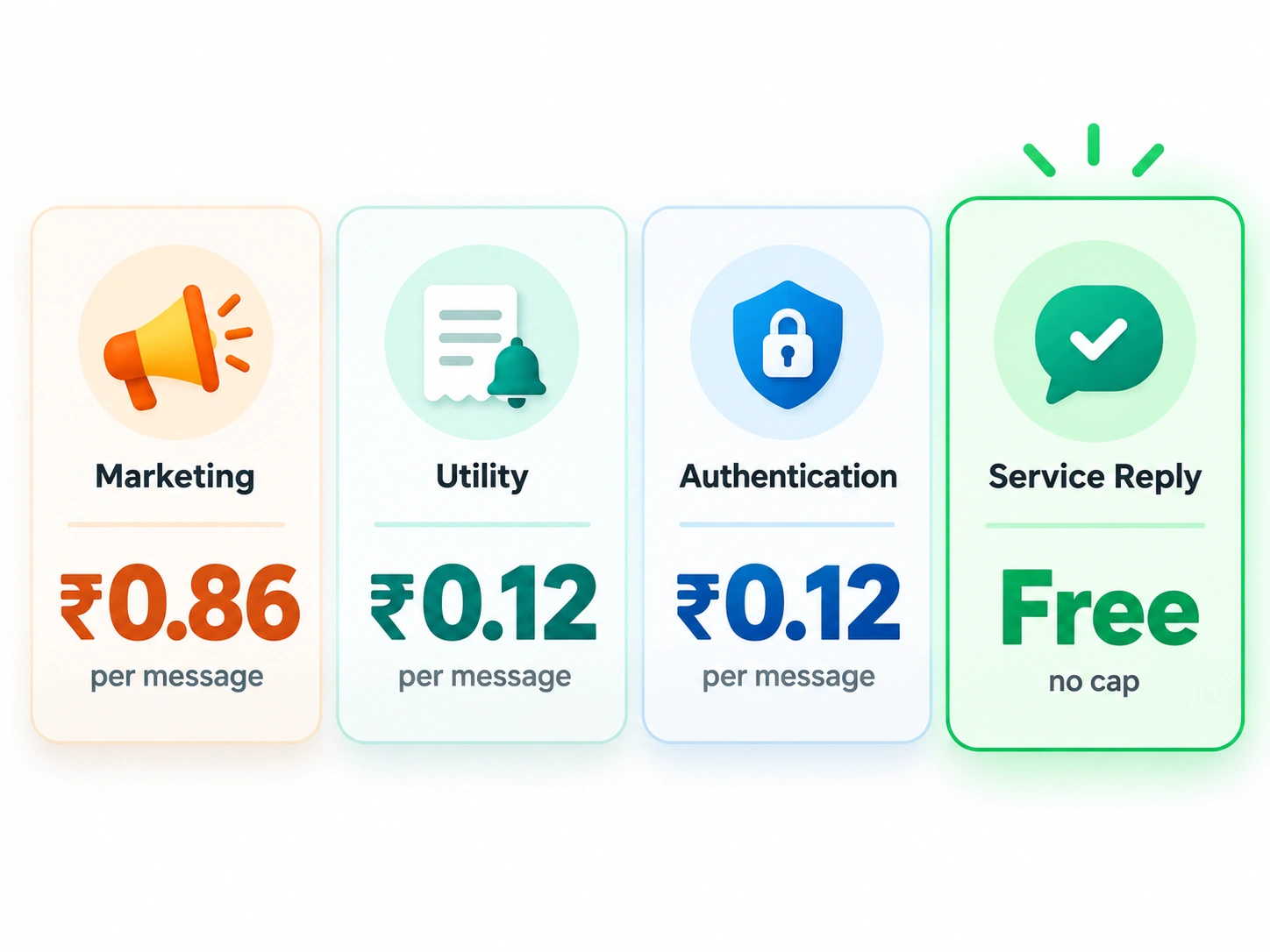
This is where most of the real money goes, because marketing messages are, by a wide margin, the priciest category Meta charges for. As of 2026, marketing messages run around ₹0.86 each in India, against roughly ₹0.12 for utility or authentication messages. That gap isn’t an accident. Meta wants promotional blasts to cost something, otherwise every business would just spam its entire contact list daily.
AI mostly helps with segmentation and creative here, not with getting around the cost itself. AiSensy, for instance, has an AI tool for generating ad creatives and another for writing template messages, so you’re not staring at a blank screen trying to come up with broadcast copy from scratch. The smarter platforms also let you segment your audience by past buying behaviour, so you’re not blasting the identical discount code to your whole list, which saves money and tends to get better replies too.
One detail worth knowing, because it quietly saves real money every month: replying to a utility-type message, like an order update, inside an already-open 24-hour window costs nothing. Send that exact same content as a fresh broadcast outside that window and Meta charges you for it. Businesses that understand this timing difference end up with noticeably smaller bills.
What This Looks Like in an Actual Business, not a Slide Deck
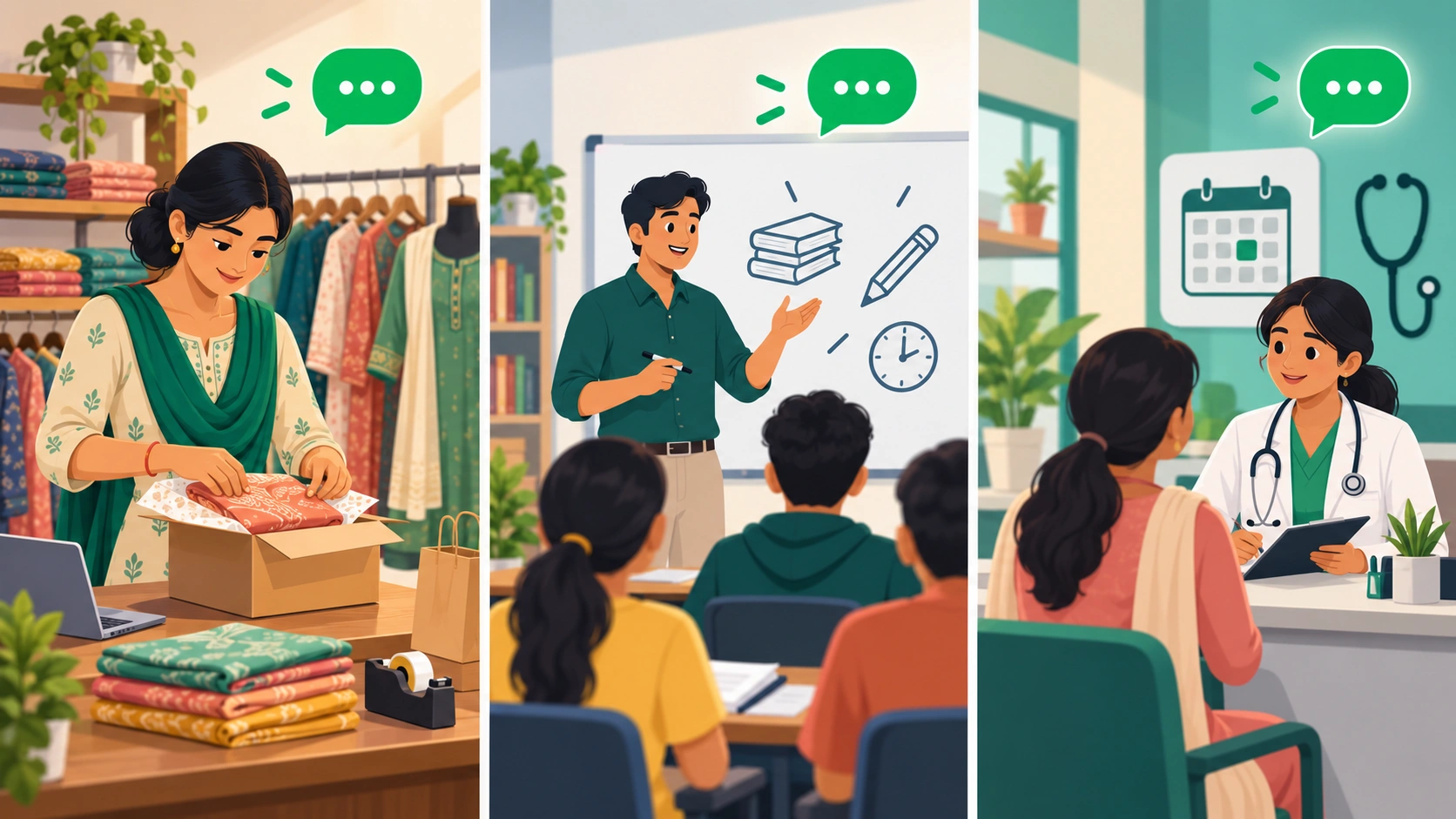
A D2C clothing brand running Meta ads sends every click straight into a WhatsApp chat instead of a landing page. A bot asks about size and style, pulls up a small catalog, takes the order, confirms COD or prepaid. No human touches that sale until it’s time to pack the box.
coaching institute pulling in 200-plus inquiries a week from ads uses a flow that asks which exam, which class, and preferred batch timing. It scores the lead and only forwards the serious ones to counsellors, and their call volume drops by more than half while conversion stays roughly the same.
A local clinic uses WhatsApp purely for booking and reminders. Patients get an instant slot confirmation, a nudge the day before, and an easy reschedule option, and the front desk never has to touch the phone for any of it.
None of these are exotic. Same building blocks every time, chatbot, qualification, follow-up, just wearing different clothes depending on the industry.
What This Actually Costs You in 2026
There are two separate bills here, and it’s easy to mix them up.
First, Meta’s own per-message rate for India, roughly as of mid-2026. Marketing messages sit around ₹0.86 each. Utility messages, order updates, reminders and the like, run about ₹0.12 each, and they’re free if sent as a reply inside a 24-hour window the customer opened. Authentication messages, your OTPs, also run about ₹0.12. And service replies, anything answering a customer who messaged you first, cost nothing, no cap.
Then there’s the BSP’s own platform fee on top of that. Here’s roughly where the big names sit right now.
| Platform | Starting monthly price | Notes |
| AiSensy | ₹1,500/month (as low as ~₹1,000 on promo entry tiers) | Unlimited agents even on the base plan, a free-forever trial tier, and decent tools for broadcasts and Click-to-WhatsApp ads |
| Interakt | ₹1,000 to ₹2,500/month | Best native Shopify integration by a fair margin, and some plans skip the template markup entirely |
| WATI | ₹2,499 to ₹3,300+/month | Stronger team inbox and CRM integrations, but the lower tiers cap you at just a few agent seats |
| Gupshup | Roughly ₹4,000+/month | Really built for higher-volume enterprise senders, not the smallest businesses |
On top of the platform fee, most BSPs quietly add a markup on Meta’s per-message rate too, usually somewhere between 10% and 30% depending on the plan, though a handful now advertise “no markup” pricing as their selling point. Ask about this number directly before you sign anything. Some sales calls will happily avoid bringing it up on their own.
Roughly speaking, a small business sending around 10,000 messages a month, a mix of marketing and utility, lands somewhere between ₹6,000 and ₹12,000 all in, platform fee, Meta charges, GST, everything. Cross into 50,000 conversations a month and you’re looking at ₹30,000 to ₹45,000, give or take, depending on the provider and your message mix.
If you’re only sending a few hundred messages a month right now, don’t bother with a subscription tier at all. Pay-as-you-go options exist without a fixed platform fee, and they’ll genuinely cost you less until your volume actually justifies committing to a plan.
Compliance: The Part That Actually Gets Accounts Banned
Most guides skip this section entirely, which is a little baffling, because it’s the one thing that can shut your whole setup down overnight without warning.
ou need real, active opt-in before you message anyone, full stop. Not a checkbox someone forgot was pre-ticked, an actual clear “yes, message me” action from the customer. India’s DPDP Act is specific about this too: consent has to be free, specific, informed, and given through an obvious affirmative step. Meta’s own WhatsApp Business policy backs this up separately from the law. Skip real opt-in and your number risks getting flagged, your quality rating tanks, and delivery gets throttled for every message you send after that, not just the one that got reported.
Keep proof of that consent somewhere safe. If a customer later disputes ever agreeing to hear from you, the burden on you to show they did, not on them to prove they didn’t. Save the timestamp, the channel they opted in through, and the exact wording they agreed to.
Also, don’t forget the general-purpose AI ban mentioned earlier. Since January 2026, Meta won’t allow open-ended, chat-about-anything assistants running as the main experience on the Business API. Your bot needs an actual job, orders, bookings, support, something concrete, not a role as a general-purpose AI friend. Honestly, this constraint pushes you toward building something more useful anyway. A focused bot tends to convert better than a chatty one regardless of what Meta’s rules say.
And give people an easy way out. Every flow you build should honor “STOP” or something equivalent, properly, every time. It’s required, and ignoring opt-outs is the single fastest route to getting your number reported and suspended.
None of this is hard to set up. It’s just the kind of thing that gets forgotten while everyone’s staring at conversion numbers instead of consent records, and it tends to bite you months down the line, right when you’re least prepared for it.
Which Tool to Actually Buy
If you’re a small D2C or service business just getting started and want the cheapest entry point with solid broadcast and ad tooling, AiSensy is the sensible pick. Lower starting price, unlimited agents even on the base plan.
If you already run on Shopify and care more about order automation than marketing blasts, Interakt fits that shape better. Its e-commerce integration is genuinely a step ahead of the alternatives here.
If you need a real team inbox, tighter CRM ties to Zoho or HubSpot, and you’re running a support-heavy operation with several agents on the floor, WATI’s higher price tag earns its keep. Just budget for what extra seats cost once your team grows past the included limit.
Whatever you land on, don’t sign an annual contract in month one. Run the 14-day trial, send it real messages from real customers, watch how the bot handles an actually messy conversation, and only then decide if it’s worth a year of your marketing budget.
Getting Started This Week
You don’t need a six-month plan for any of this. A realistic first move looks like: pick one BSP, get your API access approved (usually a few days through the provider, not weeks), and build exactly one simple flow, greeting, FAQ, lead capture. Run it for two weeks and actually watch the conversations happen. Fix whatever breaks. Add the follow-up sequence once the basics hold up. Only after that, start layering in broadcast marketing.
The businesses that get real value out of WhatsApp automation are the ones that start small and adjust based on what customers actually type, not what looked good in a demo video. Get the opt-in right, get the basic flow right, and let everything fancier wait its turn.

The Team Compare BizTech is made up of people from marketing backgrounds, digital marketing & content marketing backgrounds, each with unique experiences and nuggets of wisdom to share with you. The team is passionate about creating unique, accurate, and engaging content.