
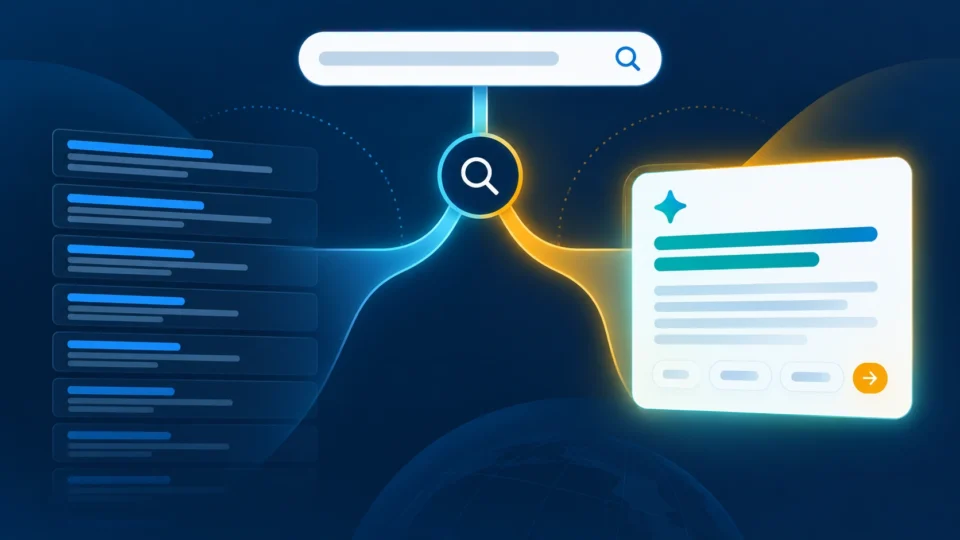
Noticed your traffic sliding even though your rankings still look fine? You’re not imagining it. Something bigger than a normal algorithm update is happening here. Search is basically splitting in two now. There’s the old version, where you type something in and get ten blue links to pick through. And there’s a newer version, where an AI just reads the web for you and hands you an answer. Guess which one’s winning?
By early 2026, 68% of Google searches in the US ended without anyone clicking anything, per SparkToro’s read of Similarweb’s clickstream data. Two years earlier that number sat closer to 60%. That’s the fastest jump SparkToro has ever tracked. Now, some of this has been building for a decade, way before generative AI showed up, thanks to featured snippets and knowledge panels. But a lot of the recent spike tracks pretty closely with one thing in particular: Google AI Overviews now show up on more than a fifth of all searches, and when they do, click-through rates fall by around 60%.
So, here’s the real question if you run a small business or write content for a living: do you actually understand the three places **AI search** is happening, or are you lumping them together? Google, ChatGPT search, and Perplexity don’t work the same way. They don’t reward the same kind of content. Treat them as one blob and you’ll end up optimizing for a game none of them are actually playing.
What Is AI Search, Anyway?
Put simply, AI search means an assistant reads a handful of web pages and gives you a synthesized answer instead of a pile of links to sort through yourself. Most of these tools run on something called retrieval-augmented generation, or RAG for short. Rather than just recalling facts from training data, the model goes and fetches current pages in real time, then writes its answer based on what it finds, usually citing where it got each piece.
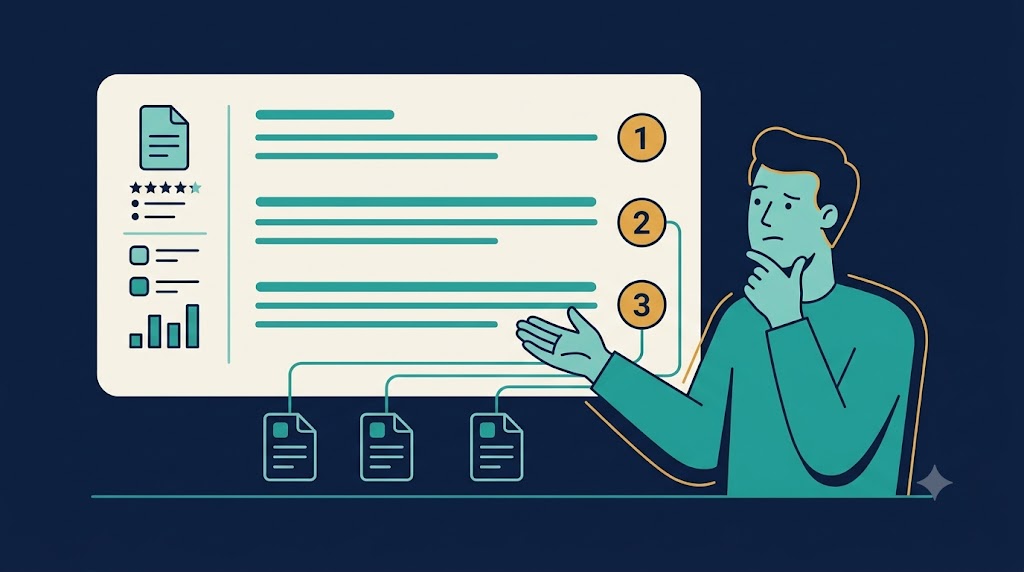
That citation piece matters a lot if you’re doing any kind of marketing or content work, and here’s why. AI citation doesn’t work like Google ranking. Google ranks whole pages against each other. AI tools pull specific passages, sometimes literally one sentence, and decide on the fly whether your line answers the question better than anyone else’s. You can sit at number one on Google for a topic and never once get pulled into a ChatGPT search answer, because your page takes three paragraphs to warm up before actually answering anything.
Google AI Overviews: Already Eating Your Clicks
AI Overviews are those AI-written summary boxes sitting at the top of a regular Google results page, powered by Gemini. You don’t ask for them. Google decides your query deserves one, and there it is, whether you wanted a quick answer or a list of ten sites to compare.
Here’s the part that should worry anyone relying on organic traffic. Pages cited inside an AI Overview don’t reliably show up in the normal top-10 results underneath it anymore. One study found only 38% overlap between what gets cited in the summary and what ranks in the top 10, down from around 76% eighteen months earlier. Another firm puts that overlap closer to 17%. So, Google’s increasingly pulling from a different pool of pages for the AI answer than the one it shows you below it. Ranking well doesn’t guarantee a spot in the summary. And getting into the summary doesn’t guarantee you’ll rank either. Weird, right?
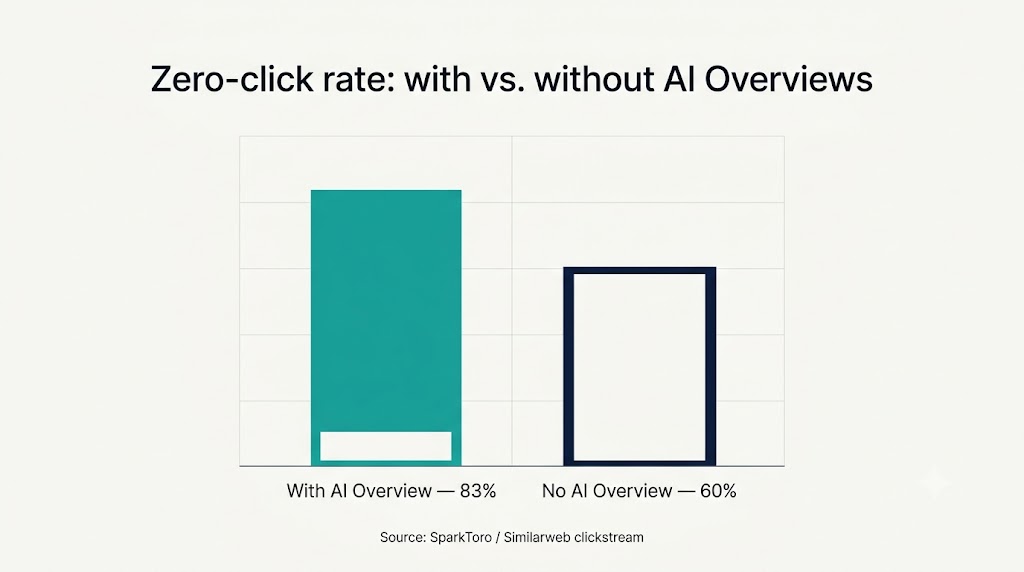
Even when your page does get pulled in, don’t expect a flood of visitors. Searches that trigger an AI Overview end without a click roughly 83% of the time, versus 60% for searches without one. Getting name-checked in an AI Overview is more like a mention in a press clipping than an actual referral. Good for your brand’s visibility. Bad for your Google Analytics dashboard, if that’s what you’re measuring success by.
 What gets you in there in the first place? Content that answers a specific question clearly in the first sentence or two, written by someone who genuinely knows the topic, and ideally backed up by other credible sites saying something similar. Google still leans heavily on its core search index and ranking signals to decide what’s trustworthy enough to summarize. Basic SEO isn’t dead. It’s just no longer the whole job.
Google AI Mode: The Shift Nobody’s Felt Yet
People mix up AI Mode and Google AI Overviews constantly, and I get why. AI Overviews sit on top of a search page you didn’t ask for. AI Mode is a separate tab you have to actively choose, and it’s built for back-and-forth conversations rather than one-shot answers. You can ask a follow-up, narrow things down, compare a few options across several turns, all without starting over.
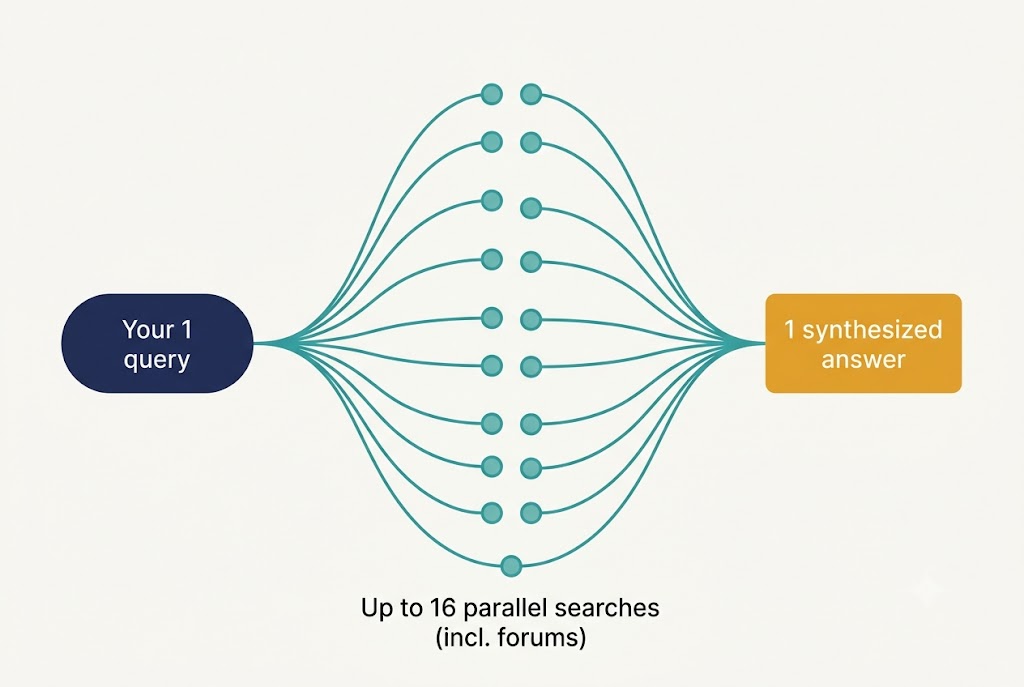
Under the hood, it runs something Google calls query fan-out. Instead of running your search once, it quietly fires off up to 16 related searches at the same time, pulling from a wider spread of sources, forums included, that you might never see in a regular results page. There are no traditional blue links at all here. Its search rebuilt to feel like a research assistant instead of a phone book.
 Right now. AI Mode is tiny. Only about 0.34% of Google searches went through it between January and April 2026, basically a rounding error next to that 68% zero-click figure driven mostly by regular Overviews. But Google announced at its 2026 developer conference that AI Mode had crossed a billion monthly users, with usage more than doubling every quarter. Worth watching closely. Not worth panicking over yet.
ChatGPT Search: Less About Facts, More About Decisions
ChatGPT search behaves differently again. Nobody really opens ChatGPT to look up a quick fact the way they’d Google it. It gets used more for bigger decisions: which project management tool to buy, how to word a contract clause, which laptop actually fits a specific budget and workload. That difference in intent changes everything about how you should try to get found there.
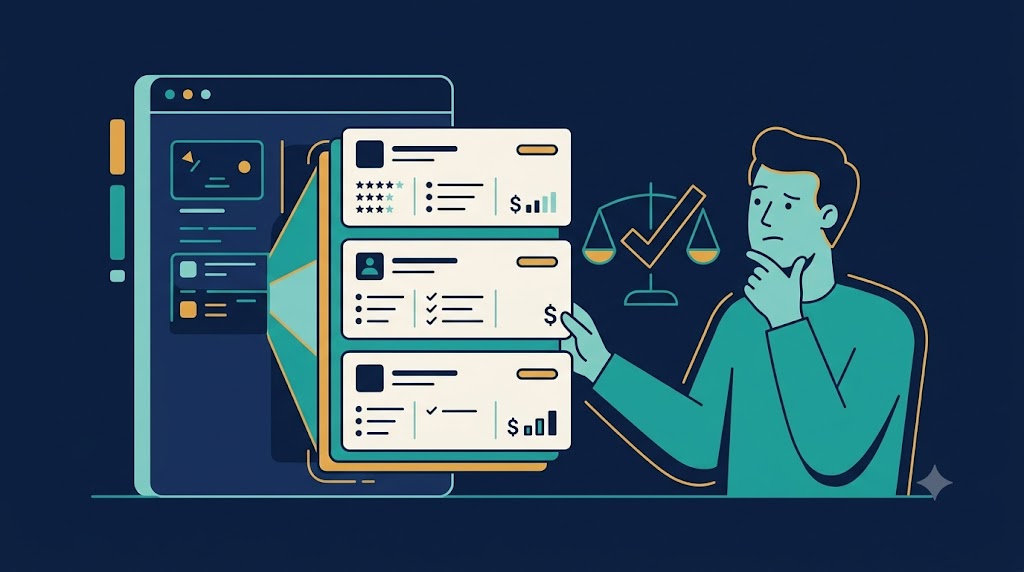 Take the shopping feature as an example. A fast classifier scans your message for buying intent in a fraction of a second. If it spots one, ChatGPT pulls in product data and re-ranks the options by relevance to what you actually asked for: price fit, availability, how many different merchants show up, not who paid for the placement. For most of 2026, OpenAI kept this feed ad-free entirely, which is unusual, considering Google’s shopping results have run on pay-to-play for years now.
That’s shifting, though. OpenAI started testing ads on the Free and Go tiers back in January 2026, and by May it had rolled out automated product feed ads, letting retailers plug in an existing catalog (the same one they’d already built for Google Shopping) and let ChatGPT auto-generate sponsored cards from it. Those ads sit clearly below the actual answer, not woven into it, and OpenAI says the model’s response itself isn’t shaped by who’s paying. Paid tiers (Plus, Pro, Business, Enterprise) stay completely ad-free, so if your customer base skews toward business users on a paid plan, ads there won’t even reach them.
For everything else, ChatGPT leans on live web browsing whenever it decides a question needs current information, citing sources inline much like Perplexity does. The takeaway for anyone writing content: ChatGPT search tends to favor pages that read like a knowledgeable person walking you through a decision, not pages built to please a 2019-era crawler with keyword density.
Perplexity SEO: Built for Research, Not Quick Answers
Perplexity carved out a smaller but distinct lane here. It’s the AI search tool built by a team with a research-and-citations mindset, and it shows. Every answer comes with numbered source links you can actually click through, which feels more transparent than what you get from ChatGPT or Google’s summaries, even though the underlying mechanics are pretty similar.
 Perplexity’s pricing has moved around a lot this year, so whatever you found last time you looked, assume it’s changed again by now. As of mid-2026, the free tier includes Perplexity’s own browser, Comet, an AI-native Chromium browser that reads whatever page you’re on, summarizes it, and can fill out forms or run simple multi-step tasks for you. Comet used to cost $200 a month bundled into the top Max plan. Perplexity dropped that paywall entirely in March 2026 and now gives away the whole browser free. Pro runs $20 a month and adds unlimited searches, access to premium models like Claude and GPT, and a deeper research mode. Max, at $200 a month, targets analysts and teams who want the “Model Council” feature, which runs several AI models on the same question and blends the answers together. For a solo founder or small team, Pro is almost certainly the right call. Max is overkill unless AI research is genuinely part of your day job.
One quirk worth flagging if you’re thinking about Perplexity SEO specifically: its zero-click rate runs even higher than Google’s, with some estimates putting it above 90%. People go to Perplexity precisely to skip reading five separate articles. If your business depends on referral traffic rather than pure brand visibility, Perplexity is one of the stingier platforms out there, even on the days it does cite you by name.
Zero-Click Search: The Trend Underneath All of This
Worth naming this pattern outright, because it explains a lot of the behavior above. Zero-click search, meaning a search that ends without a click to any website, has been climbing steadily since well before generative AI showed up. Around 50% back in 2019. AI didn’t start this fire. It just poured gasoline on it.
Practically speaking, that means the “SEO win” you’re used to chasing, more organic clicks landing on your site, is shrinking as a slice of a growing pie. People are still searching for your product category, your competitors, your business. They’re just increasingly getting the answer without ever landing on your page. That doesn’t mean search engine optimization is pointless now. It means the payoff is shifting from direct clicks toward brand visibility and trust: being the name that comes up when someone finally asks a human, or an AI, for a recommendation.
How AI Actually Decides Who to Cite
Everyone doing marketing wants a shortcut here, and there isn’t a clean one. But a few patterns hold up consistently across the research.
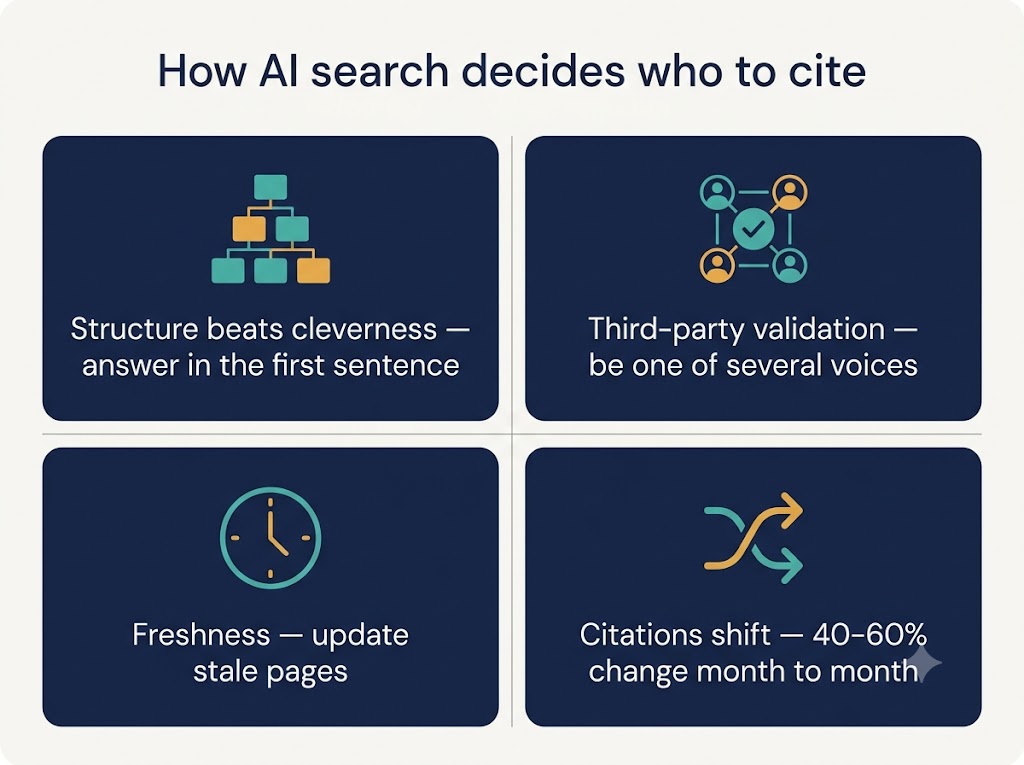 Structure beats cleverness.
Since AI models pull specific passages rather than whole pages, content that answers a question directly in the first sentence or two of a section gets extracted far more reliably than content that builds up slowly to the point. “The best CRM for a five-person sales team is X because Y” is a far more citable sentence than three paragraphs of scene-setting before you finally get there.
Third-party validation carries real weight.
These tools don’t just crawl your site and take your word for it. They tend to cross-check claims against other sources first, which means being the only place online saying something, even something true, makes you a riskier citation than being one of several voices saying it. This is part of why community platforms punch so far above their weight.
Reddit alone shows up in a striking share of citations across major AI platforms, reportedly around a fifth of Google AI Overviews citations and closer to half of Perplexity’s. If your product category has an active subreddit, showing up there with genuinely useful, non-salesy answers might be one of the highest-leverage things you can do right now, arguably more than another blog post nobody links to.
Freshness matters more on some platforms than others.
Perplexity in particular leans toward recently published or recently updated content. A three-year-old blog post with stale pricing is a liability now in a way it wasn’t under old-school SEO, where a well-linked page could coast for years without an update.
Citations shift constantly.
One analysis found that 40 to 60% of the sources cited by major AI platforms change month to month. That’s nothing like traditional organic rankings, which move slowly once a page earns its spot. Get cited by ChatGPT this month? Don’t assume that holds next month. There’s no “page one” to settle into here.
SEO vs. AI SEO: What Actually Carries Over
None of this means tossing out everything you know about SEO. The fundamentals still count, because these models still lean on traditional search indexes and quality signals to figure out what’s trustworthy enough to surface. Backlinks, real expertise, fast-loading pages, all of that still matters across every one of these systems.
What’s different is the unit you’re optimizing. Classic SEO optimizes a whole page to rank. AI SEO, sometimes called Generative Engine Optimization or GEO (you’ll also hear it called Answer Engine Optimization, AEO, though it’s basically the same thing under a different name), optimizes individual passages and claims to be extractable and quotable on their own. That’s a genuine shift in how you write, not just where you publish it.
How to Actually Measure Any of This
Regular rank tracking tools won’t tell you much about your visibility in AI search. You’ll need to check separately, by hand for now unless you’re paying for one of the newer GEO monitoring tools, whether ChatGPT, Perplexity, and Google’s AI Overviews mention your brand when someone asks a relevant question in your space. Worth tracking on a regular basis:
-Accuracy: when you do get mentioned, is the framing correct, or is the AI repeating something outdated about your product?
– Citation frequency: how often each platform names your site for questions in your niche
– Share of voice: when a question has several plausible answers, are you one of the names that comes up, or does it only go to competitors?
-Referral traffic: check your analytics for anything tagged as coming from chatgpt.com, perplexity.ai, or similar. It won’t be much, but it’s real signal.
A handful of dedicated GEO tools have popped up this year to automate this, running a set of prompts against multiple platforms on a schedule. If another subscription isn’t in the budget, doing it manually once a month with a spreadsheet of ten or fifteen questions your actual customers ask will get you most of the way there for free.
Your 2026 Strategy, In Plain Terms
Don’t write for AI search as some single target. Write for the specific question a real person would type into it, answer that question in the first sentence of the relevant section, and back it up with enough detail that a model can pull that sentence out cleanly without needing the paragraphs around it for context.
Show up where these tools already go looking for validation, which mostly means honest, non-promotional participation in forums and communities tied to your industry, not just posting on your own blog. It also means earning mentions on other credible sites, since AI citation runs on the same old-fashioned trust signal: third parties vouching for you.
Keep your content current. A pricing page or comparison post from 2023 is quietly working against you now, since freshness is a real ranking factor on at least one major platform and probably influences the rest too.
And recalibrate what winning even looks like. Fewer organic clicks against the same rankings isn’t automatically a sign something’s broken. It might just mean people are getting your answer without the click, which is annoying to measure but not the same thing as losing visibility. The businesses adapting fastest here aren’t chasing every algorithm shift as it happens. They’re writing clearer, more current content and trusting that being genuinely the best answer, in a format a machine can lift cleanly, still wins out over time.
FAQs
Q. Is traditional SEO dead because of AI search?
A. No, but the payoff looks different now. Rankings still shape whether AI tools trust and cite you, but ranking well no longer guarantees clicks. Think of search engine optimization as table stakes for AI visibility these days, not the finish line.
Q. Do I need to pay for a GEO tool right now?
A. Probably not yet, unless you’re managing content across a lot of products or clients. A monthly manual check across ChatGPT, Perplexity, and Google, using your real target questions, catches most of what a paid tool would find you anyway.
Q. Is it worth posting on Reddit as a business tactic now?
A. If your category has an active community there, yes, genuinely. Reddit’s one of the most-cited sources across every major AI search platform. It only works if the participation is honest and actually useful, though. Thin, promotional posts get filtered out by moderators and models alike, and for the same reason.
Q. Which platform should a small business prioritize first?
A. Google AI Overviews, mostly because of sheer scale. They already touch over a fifth of Google searches, and Google search still dwarfs ChatGPT and Perplexity combined in raw query volume. Content structured well for Overviews tends to carry over reasonably well to the other two anyway.

Praveen Kumar Panjiar is the founder of CompareBizTech.com, where he cuts through the noise in B2B tools with sharp, no-fluff comparisons. His work focuses on breaking down features, pricing, and real-world use cases, built specifically for high-intent buyers evaluating tools and looking to choose the right solution, fast.