
Run an online store in India and you already know the playbook here looks nothing like the American D2C content you keep reading. WhatsApp isn’t some nice extra channel, for a lot of sellers it’s basically the storefront. Cash on delivery still makes up a massive chunk of orders, which means RTO and fake COD orders quietly eat your margin in ways most “best AI tools” roundups never even mention. And a good chunk of the software everyone writes about either hasn’t bothered wiring up Indian payment gateways properly, or prices you out the second you convert dollars to rupees.
So, this list is built around that reality instead of ignoring it. A handful of picks below are global tools Indian brands genuinely rely on and that earn their subscription fee. The rest were built in India, for exactly this market, WhatsApp commerce, COD verification, GST-ready billing, and they’d get skipped entirely on a generic global list. Every entry here does a specific job, comes with real current pricing, and gets an honest take on who should skip it. This is meant to work as an actual buying guide for best AI tools for ecommerce in the Indian market, not a list of fifteen logos with no opinion attached.
How I actually evaluated these
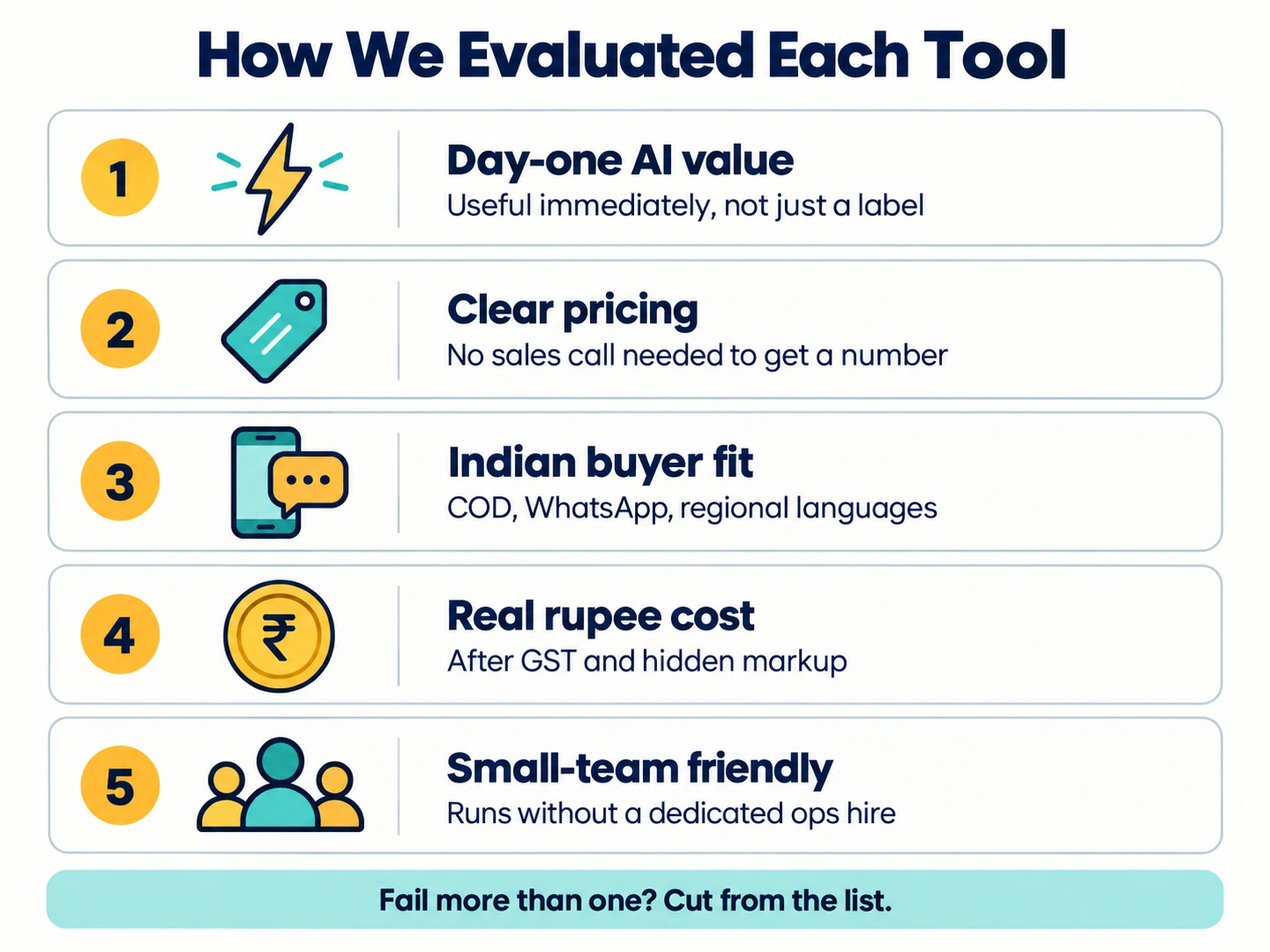
Five things mattered for every tool on this list. Is the AI feature something you’d actually use on day one, or just a label slapped onto a product that was already doing fine without it? Is the pricing clear enough to budget against, because an alarming number of ecommerce automation tools hide their real cost behind a sales call you have to book just to get a number? Does it fit how Indian buyers actually shop, COD, WhatsApp, regional language support? What’s the real rupee cost once GST and any hidden markup get added on top? And could a small team without a dedicated ops hire actually run this thing without hiring someone new just to manage it? Anything that failed more than one of those got cut, no matter how big the funding round behind it was.
Quick comparison: all 15 at a glance
| Tool | Category | Starting Price (India) | Best For |
| Zoho Commerce (with Zia AI) | Best Overall | ₹999/month | Full-stack Indian SMBs wanting one connected system |
| Interakt | Marketing / WhatsApp | ₹999/month | WhatsApp-first D2C brands |
| AdCreative.ai | Marketing / Ads | ~₹1,700/month (annual) | Brands running paid Meta and Google ads |
| Shopify Magic | Product Descriptions | Free with Shopify plan | Shopify sellers who need fast first drafts |
| Jasper AI | Product Descriptions | ~₹4,100/month | Teams writing at volume across channels |
| Yellow.ai | Support | Free tier, then $0.99/resolution | Enterprise-scale conversational support |
| Freshdesk (Freddy AI) | Support | ₹1,600/agent/month + AI add-on | Growing teams that already run tickets |
| Unicommerce | Analytics / Inventory | ~₹2,000/month | Multi-warehouse, multi-marketplace sellers |
| Vue.ai | Personalization | Custom, enterprise | Fashion and apparel catalogs |
| Algolia | Personalization / Search | Free tier, then usage-based | Stores with large or fast-growing catalogs |
| Klaviyo | Free up to 250 contacts | D2C brands running serious email/SMS flows | |
| Shipway | Automation / Logistics | ~₹1,500/month | COD-heavy brands fighting RTO |
| Rebuy | Automation / Upsell | ~₹16,500/month ($199) | Stores wanting to lift AOV at checkout |
| Canva Magic Studio | Design | Free, Pro ~₹499/month | Solo founders and lean marketing teams |
| ChatGPT | Free Tools | Free, Plus $20/month | Brainstorming, drafts, quick analysis |
Best Overall: Zoho Commerce
Zoho is really the only name here that genuinely tries to be everything at once: storefront, inventory, invoicing, CRM, support, all from an Indian company that prices in rupees and already understands GST without you having to bolt anything on. That combination is rare, and it’s the whole reason it takes the top spot on any honest list of ecommerce software for the Indian market.
Zoho Commerce itself starts at ₹999 a month for the Starter plan (2,000 products, 2,000 customer accounts), climbs to ₹2,999 for Professional, and tops out around ₹5,599 for Advanced, which adds price lists and B2B credit limits. Here’s the part worth knowing before you sign up though: the actual AI layer, Zia, isn’t bundled into Commerce itself. It sits inside Zoho’s Enterprise tiers across CRM, Desk and Analytics, usually starting around $40 a user a month (roughly ₹3,300), or you get the whole thing at once through Zoho One at about $37 a seat if you’re licensing your entire team.
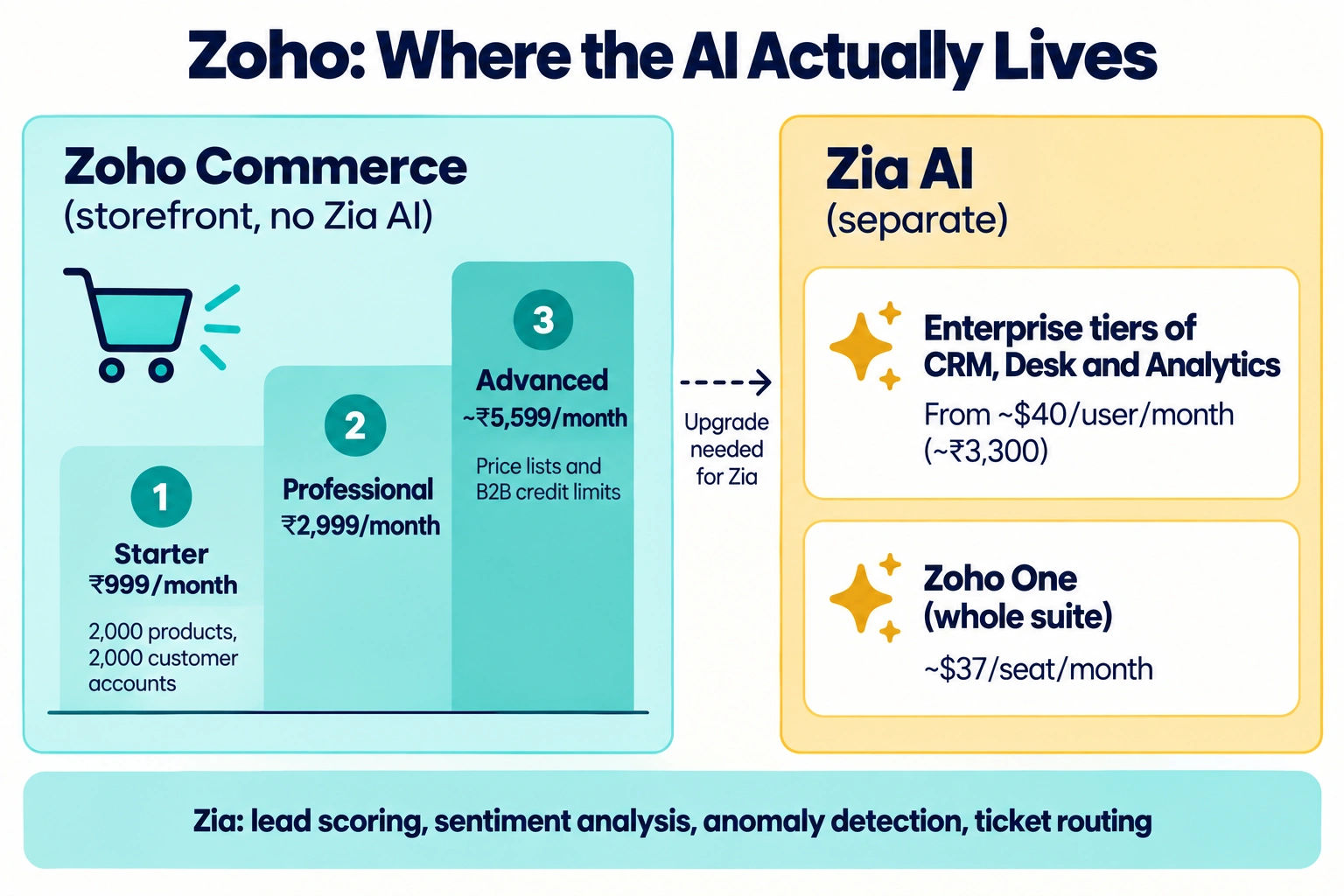
So, here’s the honest version. Zoho Commerce on its own is a genuinely affordable, India-friendly storefront and back office, full stop. The real AI, predictive lead scoring, sentiment analysis, anomaly detection, automated ticket routing, only kicks in once you step up into pricier tiers or the full Zoho One suite. Just want a working store with GST invoicing sorted out? Commerce alone is solid value. Want Zia doing actual work across sales and support? Budget for that jump before you commit.
Skip it if you’re already deep into Shopify with a stack of apps that work. Migrating your whole storefront just to get one connected suite rarely pays off unless you’re starting from zero.
Marketing: Interakt and AdCreative.ai
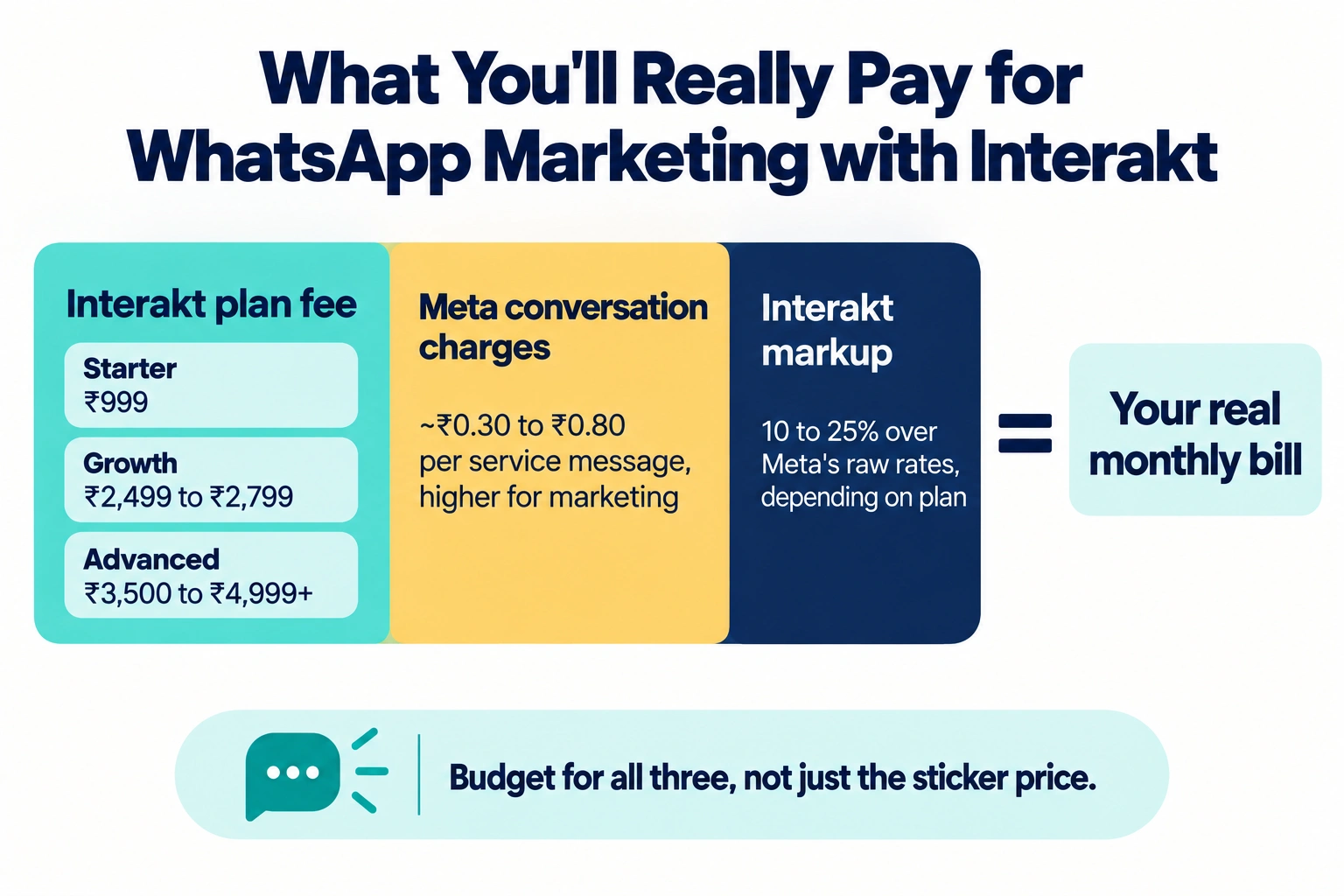
Interakt earns the top marketing slot for one simple reason: in India, WhatsApp marketing basically is ecommerce marketing. Owned by Haptik, which is itself a Reliance Jio company, Interakt runs abandoned cart recovery, order updates and broadcast campaigns natively on WhatsApp, with AI-assisted chatbot flows handling the repetitive back-and-forth. Pricing runs ₹999 a month on Starter, ₹2,499 to ₹2,799 on Growth, and ₹3,500 to ₹4,999-plus on Advanced, on top of Meta’s own per-conversation charges (roughly ₹0.30 to ₹0.80 per service message, more for marketing ones). Worth being blunt about: Interakt tacks on a markup of 10 to 25% over Meta’s raw conversation rates depending on your plan, so don’t assume the sticker price is your whole bill.
AdCreative.ai handles a different job entirely. It generates AI ad creative variations for Meta and Google campaigns and scores them for predicted performance before you spend a single rupee testing manually. Pricing starts at $39 a month (about ₹3,300) monthly, dropping to roughly $20 to $25 if you pay annually, climbing to $249 and $999 on the Professional and Ultimate tiers for higher credit limits. Genuinely useful if you’re spending real money on ads and tired of a designer turning around five variations a week. A bad buy if your monthly ad budget sits under ₹50,000, because the tool then costs more than the lift it’ll realistically find you at that scale.
Product Descriptions: Shopify Magic and Jasper AI
Shopify Magic comes free with any paid Shopify plan and drafts product descriptions, email subject lines, even basic photo edits like background removal, right inside your dashboard. Already on Shopify? There’s genuinely no reason not to use it for first drafts. It won’t replace a real copywriter on your hero products, but for SKU number 200 in your catalog, it saves real hours.
Jasper AIis the better pick if you’re not on Shopify, or if you’re writing across more than just product pages, think ad copy, blog posts, email campaigns too. It runs around $49 a month (roughly ₹4,100) for one seat on the entry plan, scaling up with word volume and team size. The tradeoff versus Shopify Magic is simple: better output and more channels, but you’re paying an actual monthly bill instead of getting it free-with-platform.
One honest note for both: AI-written descriptions read fine one at a time, but line up ten of them and they start sounding like the same person wrote all of them, because one did. Use either tool for the rough draft, then get a human to edit the top 20% of your catalog that actually drives the revenue.
Support: Yellow.ai and Freshdesk
Yellow.ai is the biggest India-born name in enterprise conversational AI, built here, used by global brands like Sony and Hyundai, covering 35-plus channels and 135-plus languages including most major Indian regional ones. The free tier gets you one AI agent and 500 chat sessions a month, then charges $0.99 per resolution past that. Beyond free, real enterprise pricing is quote-only, and third-party estimates put small setups around $100 to $300 a month, with full multi-channel voice-and-chat rollouts running $500 to $5,000-plus. Right tool if you’re a genuinely large operation handling thousands of conversations across languages. Overkill, and a budgeting headache, for a growing D2C brand still doing a few hundred orders a week.
Freshdesk, from the Indian company Freshworks, is the more sensible pick for most growing stores. Base plans run ₹1,600 to ₹7,400 per agent per month (Growth up through Enterprise, roughly $19 to $89), and the Freddy AI Copilot add-on that drafts reply and summarizes tickets runs about $29 an agent a month on top, only available from Pro upward. There’s also a session-based Freddy AI Agent that resolves tickets on its own, priced around $49 per 100 sessions, with 500 sessions bundled free on eligible plans. Run the math for your actual team size before you sign anything, a 10-agent team with Copilot on Pro lands closer to $84 an agent a month, not the $55 you saw on the pricing page.
Analytics: Unicommerce
This is the entry most global lists skip completely, and honestly it might be the most important one here for any Indian brand selling across several marketplaces. Unicommerce, out of Gurugram, is an order and inventory platform built specifically for sellers juggling Amazon India, Flipkart, Myntra, their own Shopify store and offline retail all at once, with AI-assisted demand forecasting flagging what to reorder and when before you either run out or get stuck holding dead stock.
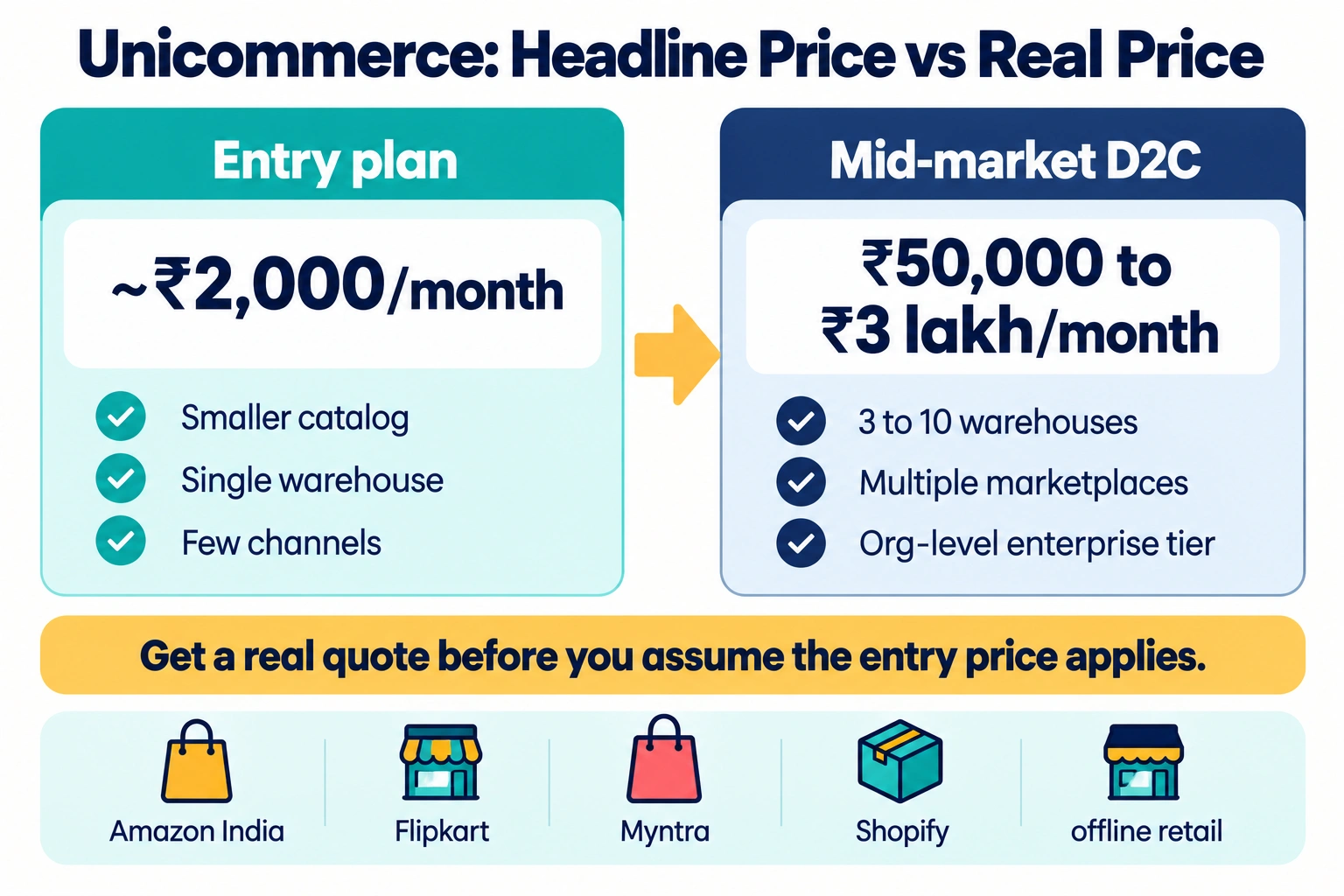
Pricing gets genuinely murky here, so let’s be upfront about it. Entry plans start around ₹2,000 a month for smaller catalogs on a single warehouse, but real mid-market D2C brands running three to ten warehouses across several channels typically land somewhere between ₹50,000 and ₹3 lakh a month once they’re on the org-level enterprise tiers. That’s a real jump from the headline number, and it’s worth getting an actual quote rather than assuming the entry price applies to you.
Skip it if you’re on one channel with a single warehouse, Zoho Inventory does that job for a fraction of the price. It earns its cost once you’re syncing stock across four-plus channels and the spreadsheet approach has already started causing overselling.
Personalization: Vue.ai and Algolia
Vue.ai, which grew out of the Chennai-founded Mad Street Den, is a strong pick specifically if you sell fashion or apparel. It automates product tagging straight from photos, generates on-model imagery without a photoshoot, and personalizes what shoppers see based on how they browse. Pricing isn’t public, this is squarely enterprise territory, with realistic deployments starting around $1,000-plus a month once onboarding is factored in. Not built for a small catalog. It earns its price once you’re managing thousands of SKUs and drowning in manual tagging work that nobody has time for.
Algolia does something different and does it well: AI-powered search that understands typos and what someone actually meant instead of just matching exact keywords, plus a recommendations layer on top. The free Build tier covers 10,000 search requests and 50,000 records a month, plenty for a genuinely small store to run on for free, forever. Paid Grow plans bill on usage, roughly $0.50 per 1,000 extra search requests and $0.40 per 1,000 extra records, and the AI-powered Grow Plus tier (synonyms, better ranking, personalization) charges more, $0.75 to $1.75 per 1,000 requests. Once your catalog passes a couple hundred SKUs, this usually pays for itself just in reduced “no results found” abandonment alone.
Email: Klaviyo
Klaviyo stays the default pick for Indian D2C brands doing serious email and SMS marketing, and its AI features, predictive lifetime value, churn scoring, send-time optimization, ship inside the standard plans rather than getting sold as some pricey bolt-on. The Email plan is free up to 250 contacts, then scales from about $20 a month at 500 contacts to $150 at 10,000, and well past $1,000 a month once your list crosses 100,000. Add SMS and the number climb further, and you’ll need to budget Indian SMS or WhatsApp costs separately, since Klaviyo’s native messaging assumes US-style carrier pricing.
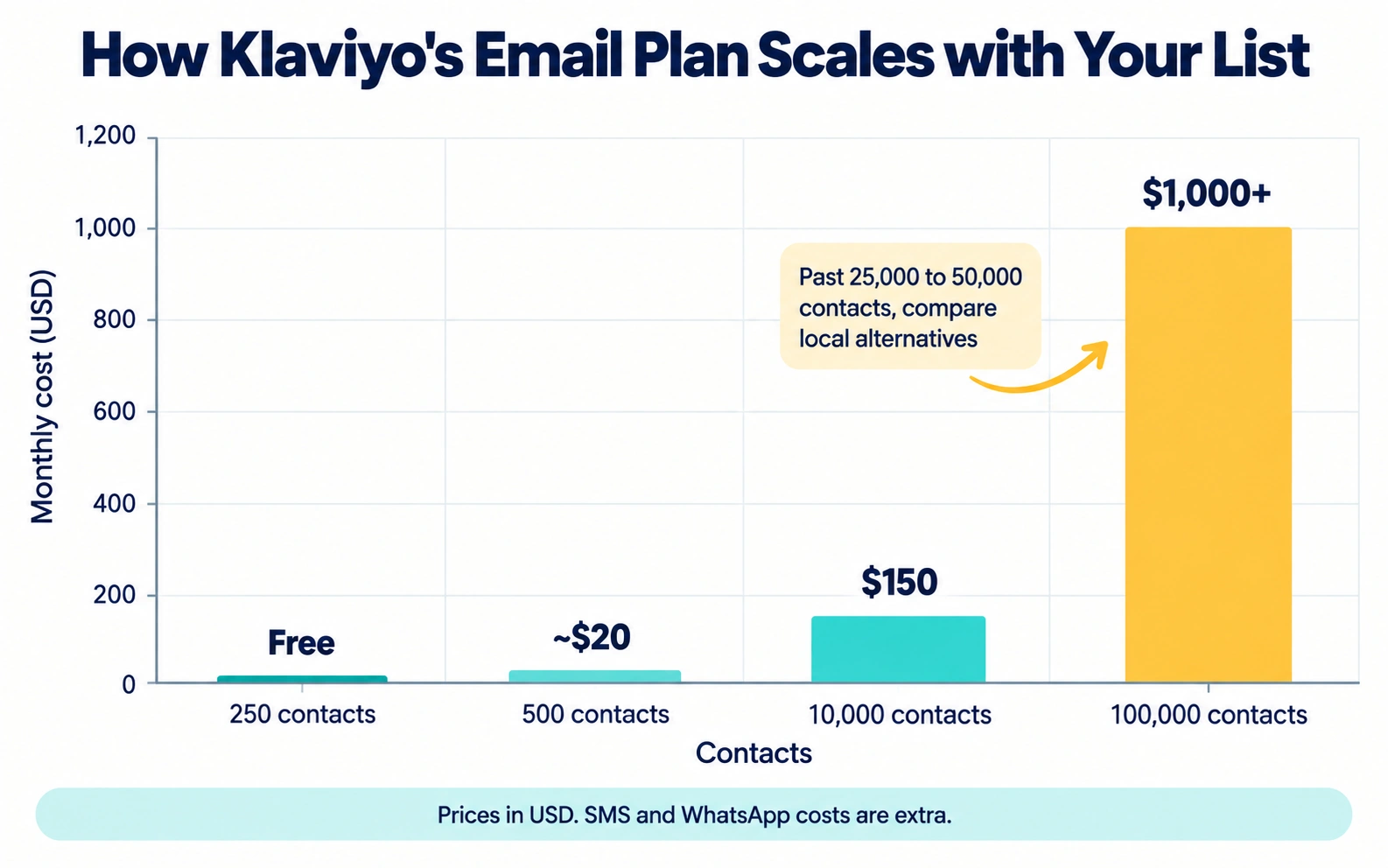
Here’s the tradeoff worth sitting with: Klaviyo prices and bills in dollars, which stings more once you do the conversion. For a bootstrapped Indian brand under a few thousand contacts, it’s still one of the more affordable entry points on this whole list. Past 25,000 to 50,000 contacts, run the actual numbers against local alternatives before you renew on autopilot.
Automation: Shipway and Rebuy
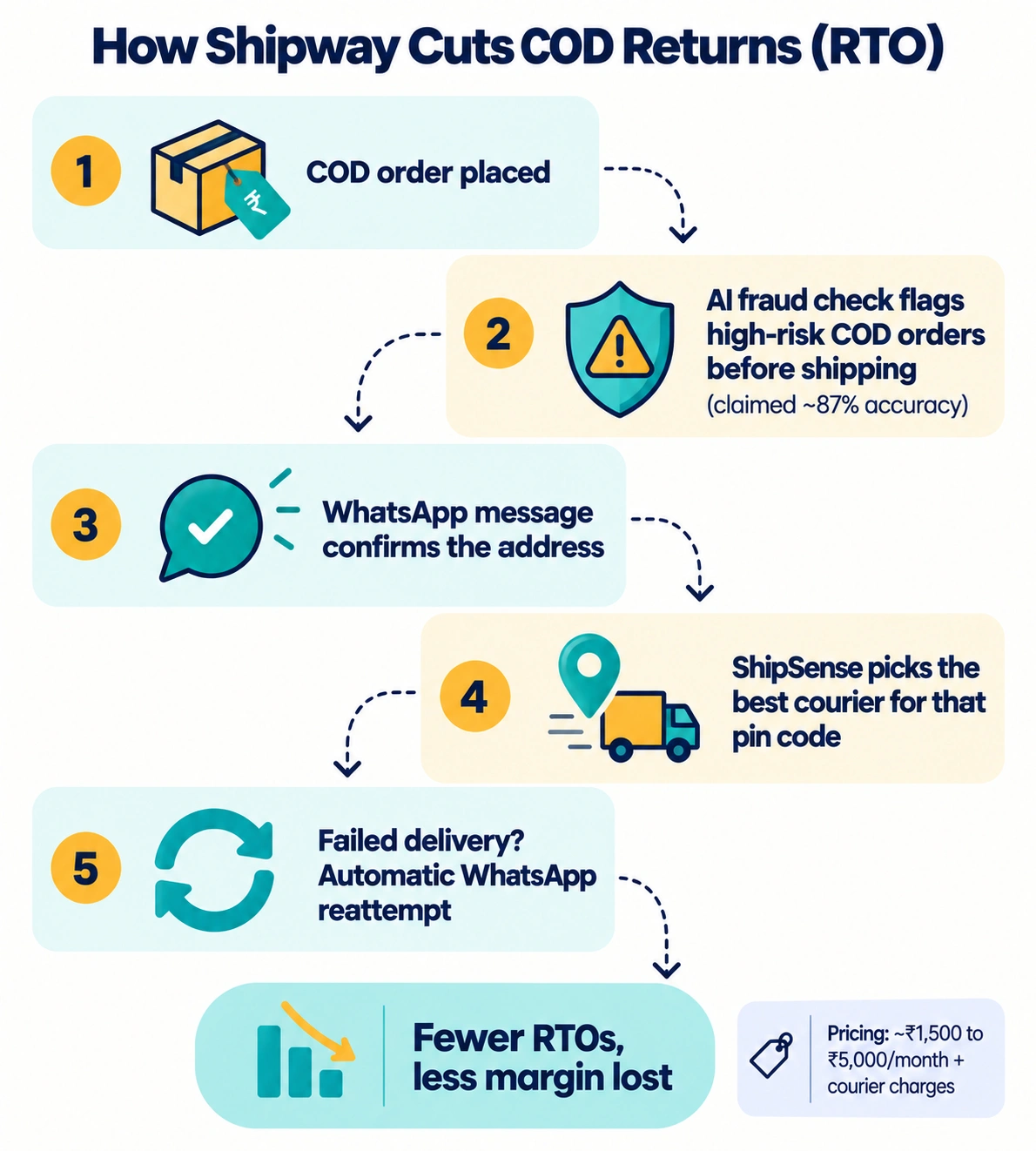
Shipway tackles the problem almost no global AI tool list ever mentions: India’s genuinely brutal COD return-to-origin rate. Its ShipSense AI engine picks the best courier per pin code using real delivery performance data, its fraud detection flags high-risk COD orders before they even ship (claimed around 87% accuracy), and automated WhatsApp flows confirm addresses and reattempt failed deliveries without your ops team touching a thing. Pricing starts modestly, around ₹1,500 a month for basic tracking and notifications, climbing to ₹3,000 to ₹5,000 for the fuller automation suite, plus your actual courier charges sit on top of that. A brand doing 15,000 orders a month with a heavy COD mix can save tens of thousands of rupees monthly just from RTO reduction, this is genuinely one of the highest ROI tools on this entire list if COD is your reality.
Rebuy works the opposite end of the funnel: AI-driven upsells and cross-sells at checkout and post-purchase, learned from what similar carts actually bought rather than showing every single customer the same generic “add a warranty?” popup. Starts around $199 a month (roughly ₹16,500) plus fees tied to your order volume.
Skip it if your catalog’s small enough that the upsell logic is obvious without any model doing the thinking.
Use it if your catalog has real depth and checkout AOV has stalled out.
Design: Canva Magic Studio
For solo founders and lean marketing teams with no designer on payroll, Canva’s Magic Studio covers more ground than you’d expect: AI background removal, text-to-image generation for banners and social posts, one-click resizing across every format you need. The free tier is genuinely usable on its own. Canva Pro in India runs ₹499 a month or ₹4,500 a year (works out to about ₹375 a month effectively), and Canva for Teams runs ₹6,750 a year for the first five users, which ends up cheaper per person than five separate Pro subscriptions would.
It won’t replace a real designer once your brand visuals need to be pixel-perfect and consistent across a huge catalog. But for product graphics, ad creative drafts, and social content, it’s genuinely hard to beat at this price point.
Free Tools: ChatGPT
Not ready to pay for anything above yet? ChatGPT’s free tier still gets real work done, brainstorming product names, drafting a first-pass description you’ll edit later, writing a WhatsApp broadcast message, or just thinking out loud through a pricing decision. The paid Plus tier runs $20 a month if you want faster responses and stronger reasoning for more complex analysis, but plenty of small sellers get through their first six months on the free tier alone before graduating to something more specialized like Jasper or Shopify Magic.
The honest limit here: it’s a generalist. It’s not going to sync your inventory or send a WhatsApp broadcast by itself. Think of it as the tool you lean on before you’re ready to pay for the specialized ones above, not something that replaces them once you scale.
Recommended stacks by business stage
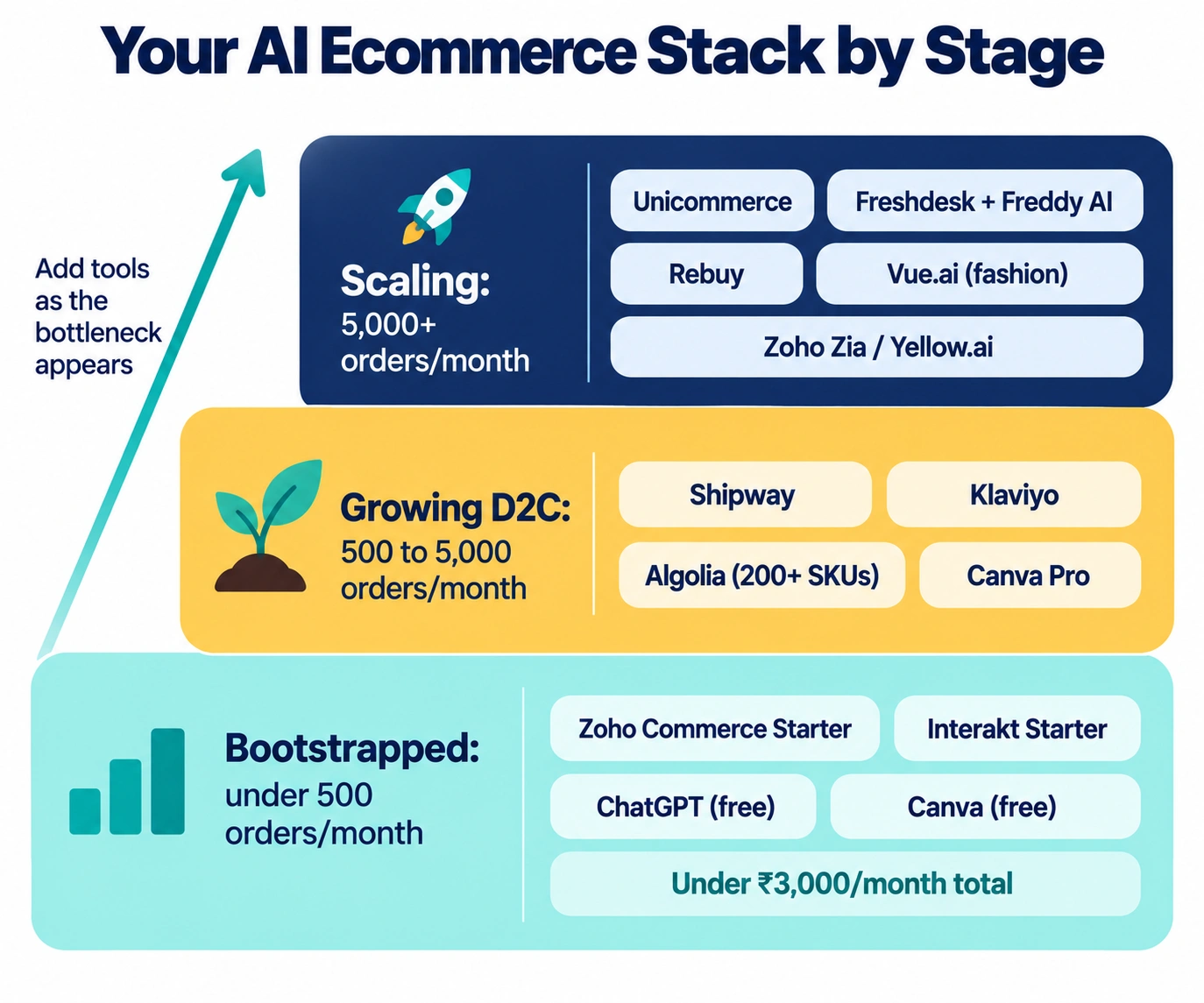
Bootstrapped, under 500 orders a month: Zoho Commerce Starter for the storefront, Interakt Starter for WhatsApp, ChatGPT’s free tier for content, Canva’s free tier for graphics. Total spend stays under ₹3,000 a month, and honestly, every tool here is something you could set up yourself this weekend without calling anyone.
Growing D2C, 500 to 5,000 orders a month: Add Shipway for COD and RTO control, Klaviyo for email and SMS flows, Algolia once your catalog crosses a couple hundred SKUs, and Canva Pro for whoever’s running marketing. This is roughly the stage where AI marketing tools ecommerce brands invest in actually start paying for themselves instead of just sitting there as a nice-to-have.
Scaling brand or marketplace seller, 5,000-plus orders across channels: Unicommerce becomes close to mandatory once you’re juggling multiple marketplaces and warehouses at the same time. Layer in Freshdesk with Freddy AI for the support volume, Rebuy for AOV, and take a look at Vue.ai specifically if you’re in fashion. This is also roughly where Zoho’s Enterprise and Zia tiers, or a proper Yellow.ai deployment, start making real financial sense instead of feeling premature.
FAQs
Q. Do I actually need all 15 of these?
A. No, and almost nobody does. Pick two or three that solve whatever’s actually bottlenecking you right now, RTO, support volume, content output, whatever it is, and come back to the rest as you grow into needing them.
Q. Which of these handle GST and Indian compliance properly?
A. Zoho Commerce and Unicommerce are built with Indian tax rules baked in from day one. Global tools like Klaviyo, Rebuy and Algolia don’t touch invoicing or GST at all, they just sit on top of whatever platform you’re already using for that side of things.
Q. Is WhatsApp automation actually worth it if I already have a website?
A. Pretty much always yes for Indian buyers. A huge share of shoppers here would rather confirm an order or ask a quick question over WhatsApp than deal with an on-site chat widget, so something like Interakt tends to genuinely outperform generic website chat in this market.
Q. What’s the single highest ROI pick here for a COD-heavy brand?
A. Shipway, specifically, no close second. RTO on COD orders is one of the biggest silent profit leaks Indian D2C brands deal with, and Shipway’s fraud detection plus WhatsApp confirmation flow goes straight at that problem instead of treating it as an afterthought feature.
Q. Should I build my whole stack around one vendor like Zoho, or mix and match best-in-class tools?
A. Depends entirely on your team. A lean team with nobody dedicated to ops benefits from Zoho’s single-login simplicity, even where individual features are a notch behind a specialist tool. A team with someone actually managing the stack day to day will usually get more out of stitching together best-in-class picks like the ones above, it just costs you more integrations to keep maintained.
Whatever you land on, the same rule holds across every category here: AI ecommerce tools India-based sellers actually stick with are the ones matched to a real, current bottleneck, not the ones with the flashiest AI label on the pricing page. Start with the problem costing you the most money right now, and let that decide which of these fifteen you open a free trial for first.

Praveen Kumar Panjiar is the founder of CompareBizTech.com, where he cuts through the noise in B2B tools with sharp, no-fluff comparisons. His work focuses on breaking down features, pricing, and real-world use cases, built specifically for high-intent buyers evaluating tools and looking to choose the right solution, fast.