
Quick gut check before we get into it: when’s the last time you actually clicked a Google result for something simple? Weather, a store’s hours, “how many ounces in a cup”? Probably not recently. You got your answer and moved on. Multiply that by billions of searches a day and you get where we are in 2026- most searches don’t end in a click at all.
The number backing this up is honestly a little startling. Between January and April 2026, 68.01% of US Google browser searches ended without a click, redefining what SEO success even means anymore. That’s not a rounding error or a weird quarter. A decade ago, the figure sat around 45%. So, we’ve picked up 23 points in ten years, and the climb hasn’t slowed down.
If your marketing plan still assumes “get them to click, then sell them something,” you’re building on ground that’s shrinking under you. But here’s the part nobody tells you upfront: zero click search doesn’t have to mean zero revenue. It means the scoreboard changed, and most businesses just haven’t noticed yet.
So, What Is a Zero-Click Search, exactly?
Nothing fancy here. Someone types a question into Google, or asks ChatGPT, or Gemini, gets a full answer right on the results page, and never opens a website. No tab. No page load. No visit that shows up in your analytics. Whatever business could’ve answered that question never gets the chance to say hello.
This has been happening for years with stuff like sports scores or time zones — nobody’s mad about that. What’s changed is how far it’s spread. We’re now talking about product comparisons, “best X for Y” questions, pricing lookups — the exact bread-and-butter queries small businesses used to build whole content calendars around.
Why Are Clicks Disappearing So Fast?
Three things are pushing this, and honestly, they’re feeding off each other.
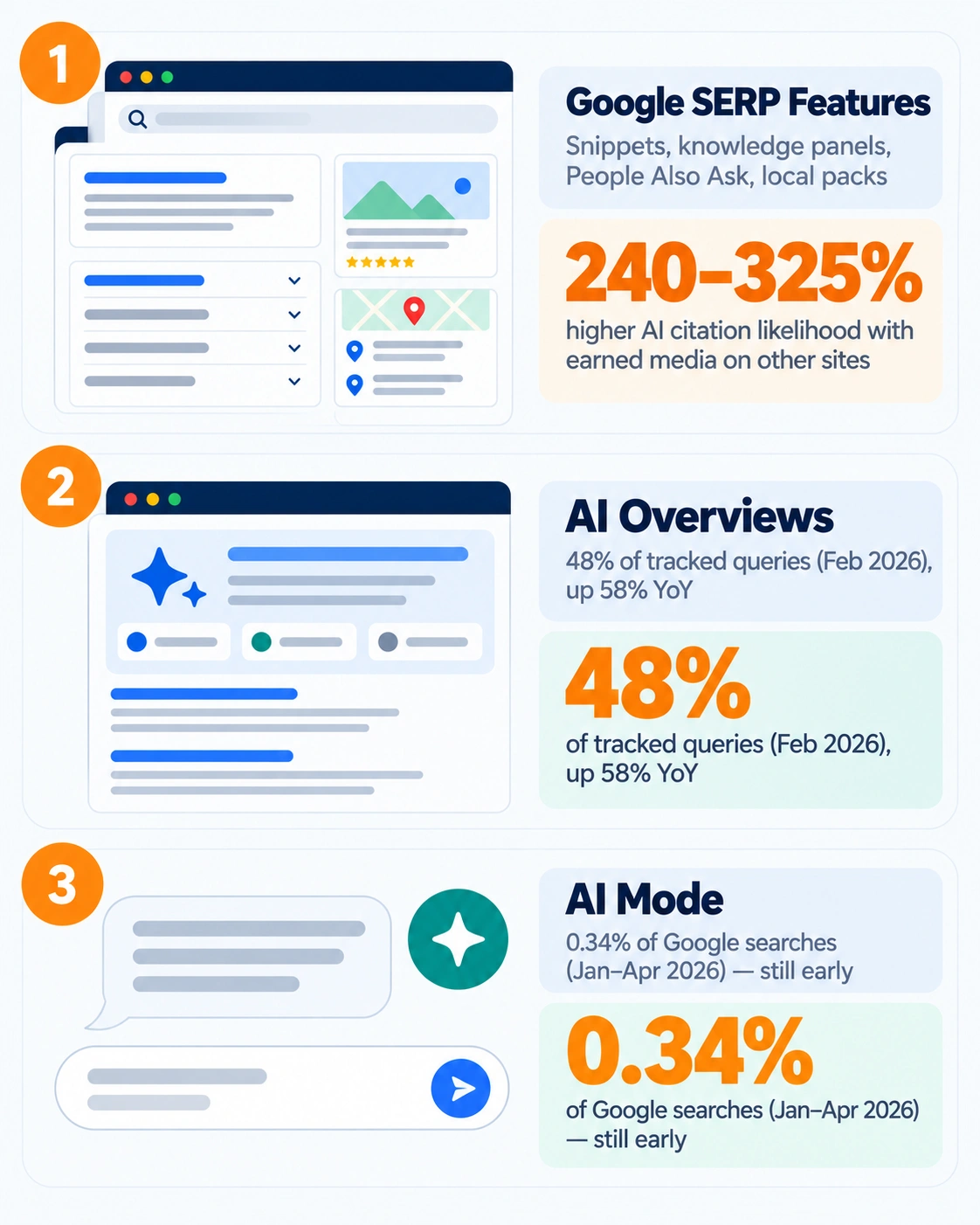
First, Google keeps cramming more answers directly into the results page itself. Snippets, knowledge panels, “people also ask” boxes, local packs — every one of these exists specifically so you don’t have to leave. That’s the whole design goal.
Second, and this is the big one, AI Overviews have gone from “interesting experiment” to “just how search works now.” These AI-written summaries sit right at the top of results, and they’re everywhere. As of February 2026, they’re showing up on roughly 48% of tracked queries, up 58% from the year before. And when one appears? People barely click through at all. Only 8% of users click a website when an AI summary shows up, versus 15% when it doesn’t. Even worse for the source links buried inside the summary itself — those get clicked by just 1% of people. One percent.
Third, and this one catch folks off guard: Google’s fully conversational AI Mode is actually still tiny. Data from January through April 2026 puts it at only 0.34% of all Google searches. Which sounds reassuring until you realize what it actually means — the bigger wave of disruption probably hasn’t hit yet. If you were hoping zero-click had already peaked, sorry, it hasn’t.
Throw ChatGPT, Perplexity, and Gemini into that mix and the picture gets clearer: the destination people are searching for isn’t a website anymore. It’s an answer, full stop.
Snippets, AI Overviews, Knowledge Panels — Not the Same Thing
People throw these three around like they’re interchangeable. They’re not, and mixing them up will send you fixing the wrong problem.
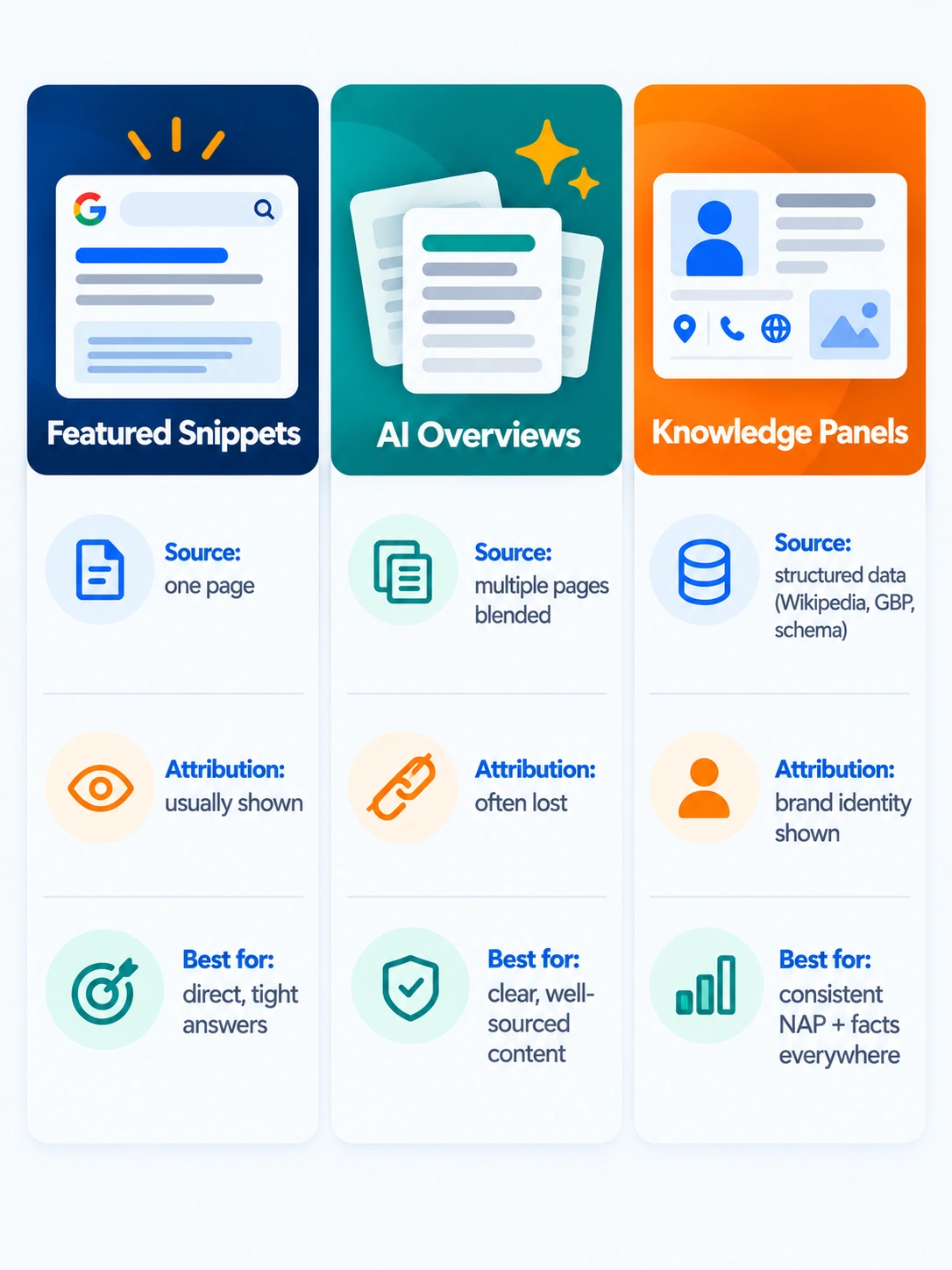
Featured snippets are the short answer box pulled from one specific page, and it usually still comes with a link and your site name attached. Out of all three, this is the closest thing to an actual win in zero click search — your brand shows up even if the click never happens.
Google AI Overviews work differently. They’re stitched together from multiple sources at once, blended into something new. Your content might be feeding the answer behind the scenes, but your name often doesn’t make it through the blend. You did the work. Google gets the byline.
Knowledge panels are those boxes on the right side for companies, people, places — pulled from structured sources like Wikipedia, your Google Business Profile, and schema markup on your own site. Don’t have one yet for your business? That’s usually a sign your online presence isn’t clean enough, or consistent enough, for Google to feel confident about who you actually are.
Why does this distinction matter practically? Because you can’t chase all three the same way. Snippets want a tight, direct answer near the top of a page. Getting cited inside an AI Overview means writing the kind of clear, well-sourced content a language model actually wants to summarize — not fluff. And knowledge panels need your basic facts (name, address, founder, services) to match everywhere online, boringly consistent, every single time.
Where Does ChatGPT Actually Fit In?
This is where things get genuinely messy, because the data on ChatGPT as a shopping and research tool doesn’t agree with itself.
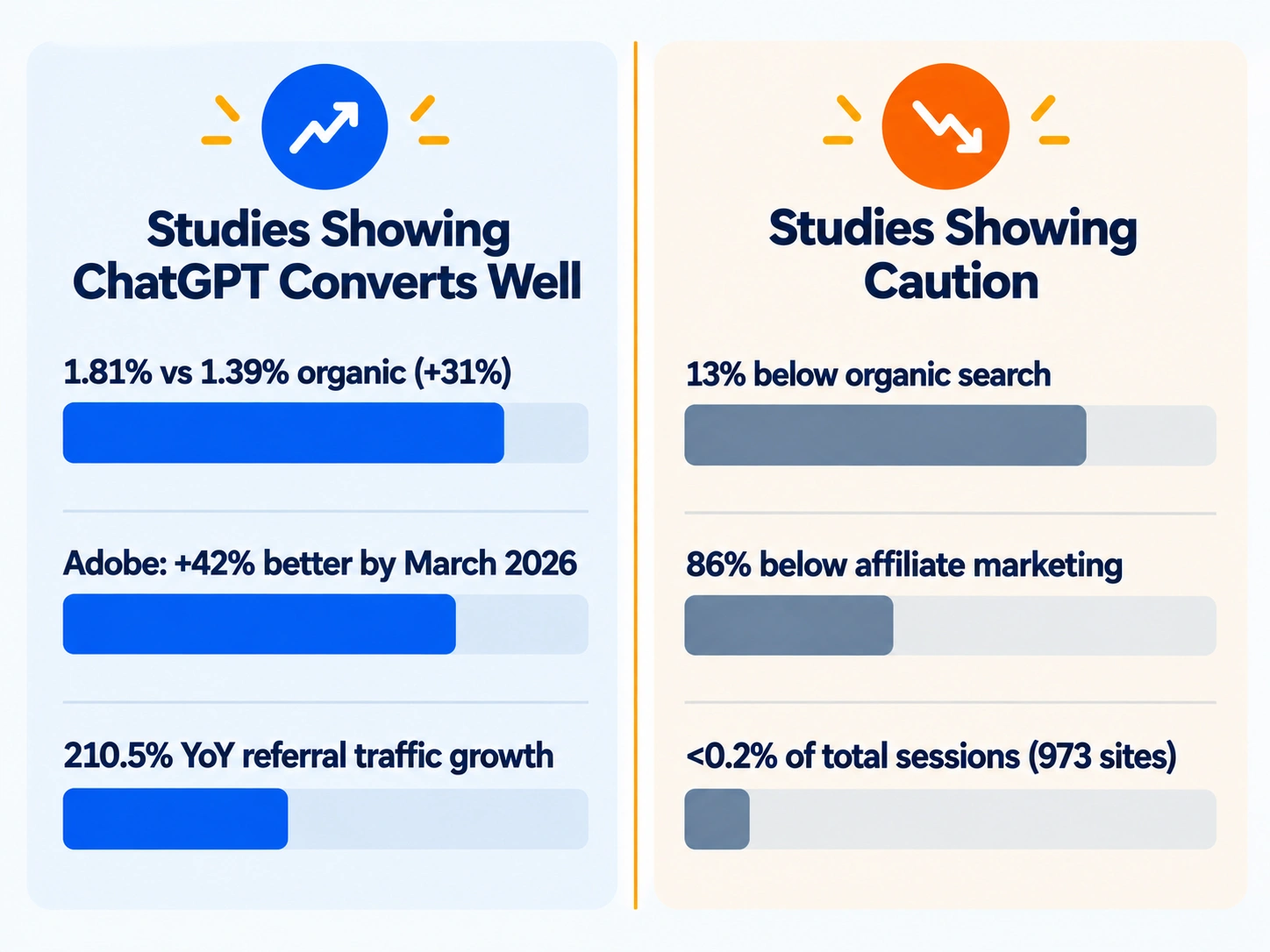
On the adoption side, growth is undeniable. PYMNTS Intelligence found 47% of ecommerce shoppers used AI during their most recent purchase, and ChatGPT’s role as a product research tool jumped from 2% to 30% in just two years. Referral traffic from ChatGPT to US ecommerce sites grew 210.5% year over year in early 2026, and among AI platforms sending shopping traffic, ChatGPT alone accounted for 92.2% of it — Gemini and Perplexity aren’t even close.
Whether that traffic actually buys anything, though? That’s the part people argue about. One widely cited study of 94 ecommerce sites found ChatGPT traffic converting at 1.81%, compared to 1.39% for non-branded organic search — a 31% lift, and it held up for most of 2025. Adobe Analytics separately found AI-referred traffic converting 42% better than non-AI traffic by March 2026, flipping hard from converting 38% worse the year before.
But then there’s a much more skeptical study pulling the rug back the other way. Researchers at the University of Hamburg and Frankfurt School of Finance looked at 12 months of first-party data across 973 ecommerce sites, worth $20 billion in combined revenue, and found ChatGPT traffic converting worse than every channel except paid social — trailing organic search by 13% and affiliate marketing by a rough 86%. In that same dataset, ChatGPT made up less than 0.2% of total sessions. Tiny. Though even they noted conversion rates were climbing steadily, month after month, as the study wrapped.
So, what do you actually do with two studies that flatly disagree? Probably just accept this: ChatGPT-driven commerce is real, it’s growing, and the people arriving through it behave differently — further along, more decided — but the category’s still small and young enough that any single stat you saw last week is a snapshot, not a law. Don’t rebuild your whole SEO strategy around one number from a LinkedIn post.
Does Website Traffic Even Matter Anymore?
Here’s the question most business owners are quietly avoiding. If most searches never produce a click, and the ones that do click aren’t guaranteed to buy — is chasing traffic still the right goal to chase?
Short version: traffic matters less as the goal itself, and more as one signal among several. A drop in visits doesn’t automatically mean a drop in business. Plenty of companies are watching their revenue hold steady, or even climb, while their raw traffic flattens out — because the exposure that used to require a click now happens inside the search result itself, before anyone lands anywhere.
Walk through it like a real person would. Someone searches “best project management software for a 10-person agency.” An AI Overview names your product alongside three competitors. They don’t click right then — why would they, the answer’s right there. But they remember your name. A week later they search your brand directly, or they type your product name into some comparison tool, or they just go straight to your pricing page from memory. That sale never gets credited to the zero-click impression that actually planted the seed, but it happened because of it.
This is exactly why SEO teams are shifting their language from “traffic” to “visibility.” Getting seen inside the answer — even without a click — is still doing real work. You just have to measure it differently than you used to.
Brand Visibility Is Basically the New Currency
If clicks are scarce, being the name that actually shows up starts to matter a lot more. This is where branded search comes in, and it deserves way more attention than most teams give it.
Branded search is when someone types your company or product name directly into a search bar, or into ChatGPT. It’s one of the clearest signals you’ll get that an earlier zero-click moment actually worked. Someone saw your name inside an AI Overview or a comparison answer, didn’t click, and came back looking for you specifically, later.
If your branded search volume keeps climbing even while general organic traffic sits flat, that’s not a coincidence — that’s zero-click visibility turning into demand, just on a delay. Check Google Search Console, filter for queries containing your brand name, and watch the trend over months. Not days. Days will just make you anxious.
What Actually Moves the Needle on Conversion Now
Since traffic alone won’t tell the whole story anymore, what should you actually be doing to turn zero-click visibility into real money?
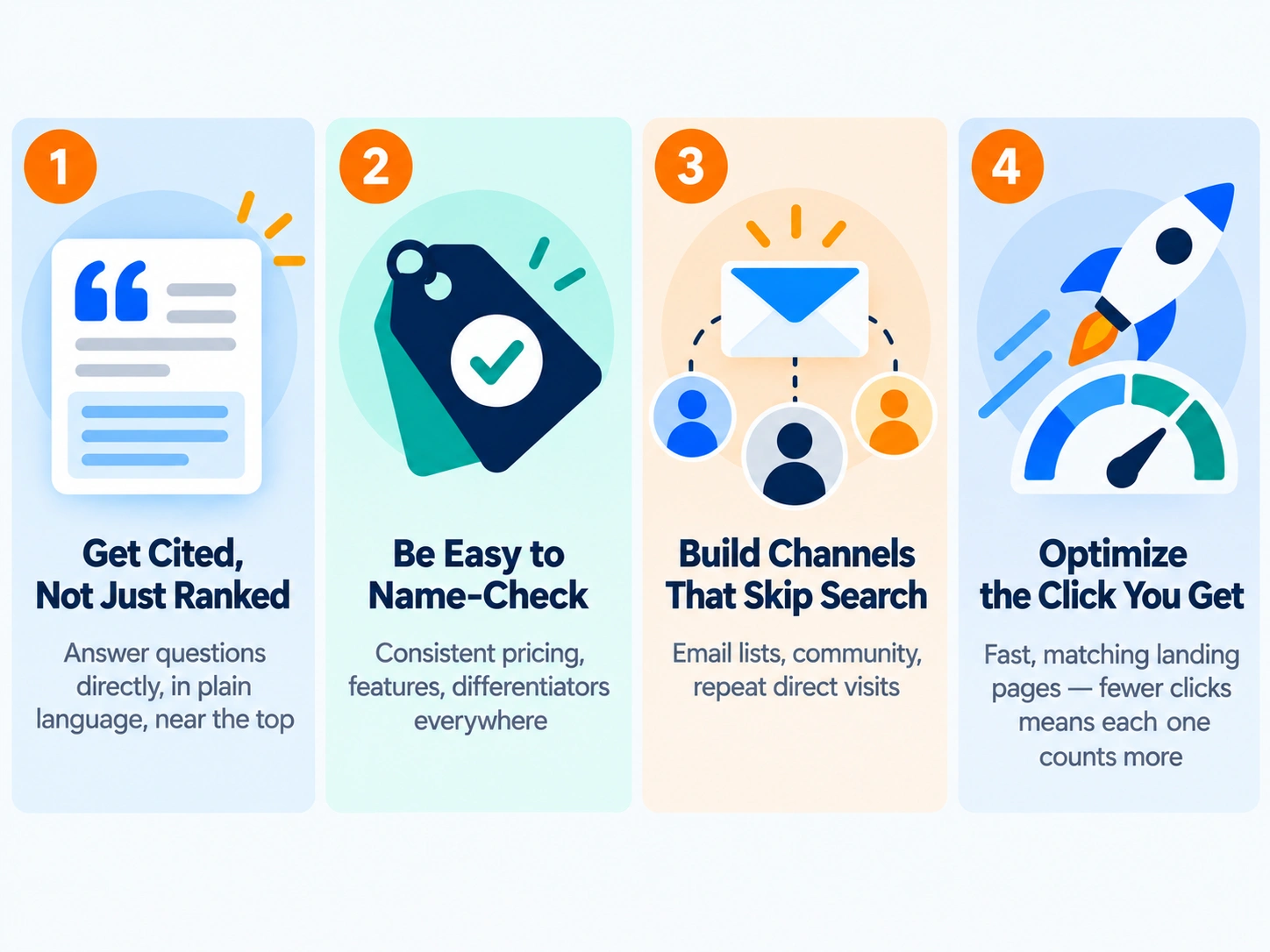
Being the source an AI Overview or ChatGPT pulls from, even without a link, puts your name in front of a buyer at the exact moment they’re deciding. Write content that answers specific questions directly, near the top of the page, in plain language. Skip the throat-clearing intro paragraph. AI tools reward directness the same way readers do.
Make your brand genuinely easy to name-check.
If your pricing, your features, and what makes you different aren’t stated clearly and consistently across your site, review platforms, and comparison sites, AI tools have nothing solid to pull from when someone asks “who’s good at X.” Vague marketing copy doesn’t get cited. Specific claims do.
Build channels that don’t depend on a search click at all.
Email lists, communities, repeat customers typing your URL from memory — these are worth more now than they were five years ago, because none of them care how any single search engine chooses to answer a question.
Optimize hard for the moment someone does click.
With fewer clicks going around overall, each one is worth more. If your landing page is slow, confusing, or doesn’t match what the AI summary promised, you’re wasting the scarce traffic you’ve still got left.
Measuring Something That Used to Be Invisible
Regular analytics tools were built to count clicks and sessions. They were never built to tell you whether your business got mentioned in an AI Overview that nobody clicked on. That gap created a whole new category of software — usually called AI search visibility or AI tracking tools — and it’s worth knowing what’s actually out there before you guess.
Semrush AI Toolkit is probably the easiest entry point if you’re already inside the Semrush ecosystem. The Base plan runs $99 a month per domain, covering 25 tracked prompts and brand mentions pulled from ChatGPT, Google AI, Gemini, and Perplexity, plus a site audit built specifically for AI readiness and 300 reports a day. The catch — and it’s a real one — that’s per domain, and it’s on top of your regular Semrush subscription if you also want the full SEO suite. Fine if you run one brand and just want a quick pulse check. Gets pricey fast if you’re managing several.
Ahrefs Brand Radar does something similar but leans toward people already living inside Ahrefs. Full coverage across all six tracked AI platforms runs $699 a month, on top of an Ahrefs subscription that starts at $129 — so realistically you’re looking at around $828 a month for the complete picture. That’s a big jump from Semrush’s entry price, and it only really makes sense if you’re already deep into Ahrefs for backlinks and rankings and want everything living under one roof.
Otterly.ai is the one worth knowing if your budget is tight. It starts at $29 a month, covers six AI engines, and throws in a 25-point readiness audit with no cap on team seats. It won’t match the depth or prompt volume of the pricier options, but for a small business just trying to find out whether AI tools even mention them, it’s a smart first step rather than a compromise.
Peec AI sits in the middle, usually landing around $80 to $89 a month depending on billing, covering ChatGPT, Perplexity, Claude, and Gemini, with a particular strength in showing exactly which sources get cited when AI tools answer questions in your category. It’s built more like a scoreboard than a fix-it tool, though — you’ll still need your own team, or another tool entirely, to act on what it finds.
Profound is built for a different kind of buyer altogether. Its entry tier starts at $499 a month with just two months of data history, scaling up to $1,499 a month for agency use, with custom enterprise pricing above that. This isn’t a tool for a five-person startup checking their visibility once a month — it’s for companies already running dedicated AI search programs with budget to match.
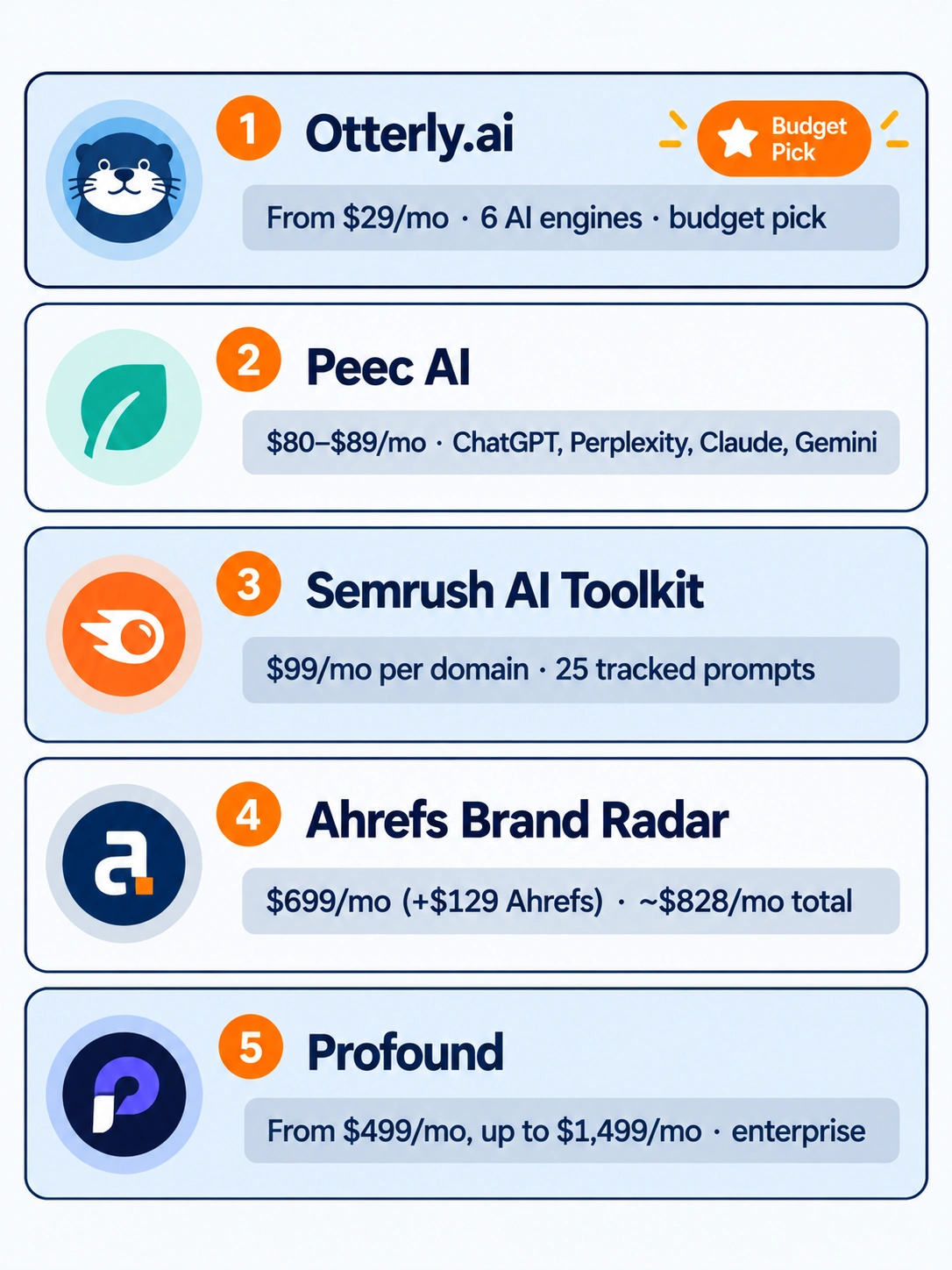
One honest note: pricing in this category shifts constantly, and vendors restructure tiers often enough that any number here is really a starting point for a sales conversation, not a locked-in quote. What matters more than the exact dollar figure is matching the tool to your actual size. A solo consultant has no business paying for Profound’s enterprise depth. A company with real ad dollars riding on AI visibility shouldn’t stay stuck on Otterly’s basic tier forever, either.
The New KPIs Actually Worth Watching
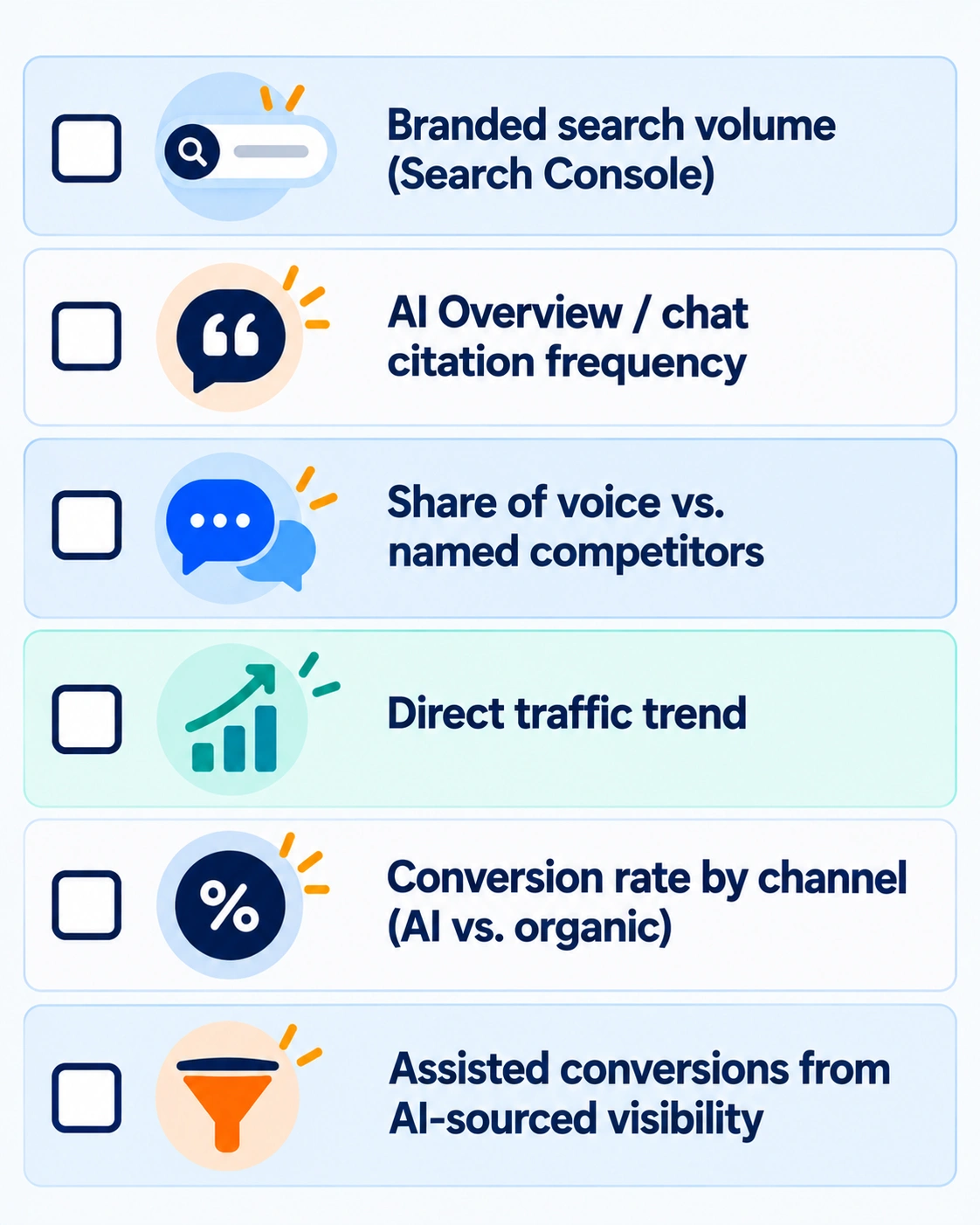
Here’s a practical starting list for a dashboard that reflects how search really works now, instead of one built for 2015:
– Branded search volume, month over month, straight from Search Console
– Citation frequency inside AI Overviews and chat tools for your core topics, using one of the tools above
– Share of voice against named competitors in AI-generated answers
– Direct traffic trends, since a chunk of that is really delayed zero-click influence showing up late
– Conversion rate by channel, watching specifically how AI-referred visitors behave differently than organic ones
– Assisted conversions, tracking whether people who saw your brand in an AI answer later convert through some other channel entirely
None of this replaces the basics — rankings and organic traffic still matter. It just sits alongside them now, because the old scoreboard alone won’t tell you whether you’re actually winning anymore.
The businesses that come out ahead here won’t be the ones panicking about disappearing clicks. They’ll be the ones who accept that visibility, not visits, is the thing worth building toward — and who start measuring it properly before their competitors even realize the scoreboard changed.

Prashant Srivastava is a digital marketing leader and AI-powered growth strategist with nearly two decades of experience across SaaS, healthcare, real estate, D2C, and B2B. His expertise spans SEO, paid media, marketing automation, analytics, and Generative Engine Optimization, helping businesses achieve measurable, sustainable growth.